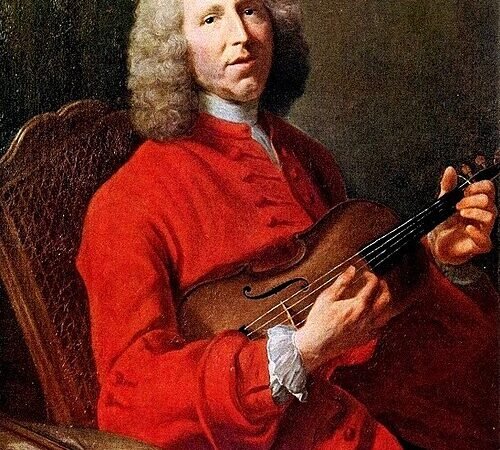
Biography (read more)
Jean-Philippe Rameau was a French composer and music theorist of the late Baroque era, born 25 September 1683 in Dijon and died 12 September 1764 in Paris. Little is documented of his early years; he worked as an organist in provincial French churches before settling in Paris. He first won fame in the 1720s as a major theorist with his Treatise on Harmony (1722) and as a composer of celebrated harpsichord suites, publishing further collections in 1724 and 1727. He was nearly 50 before beginning the operatic career on which his reputation chiefly rests, debuting with the controversial Hippolyte et Aricie (1733) and going on to replace Jean-Baptiste Lully as the dominant figure in French opera, alongside works such as Les Indes galantes and Castor et Pollux.
Rameau’s Treatise on Harmony laid foundations for modern tonal theory, including the concept of chord inversion and the fundamental bass, that shaped Western music pedagogy for centuries. As a harpsichord composer he stands, alongside François Couperin, as the leading master of the French clavecin school, and as an opera composer his harmonically daring, orchestrally rich tragédies en musique provoked the fierce aesthetic quarrels of the Querelle des Bouffons and redefined French opera for the 18th century.
Sources:
Repertoire
Suite in E minor (Pièces de clavecin, 1724)1724
Performed by Raphaël Feuillâtre, Aik Shin Tan, hsuyu316
Suite in A minor (Nouvelles suites de pièces de clavecin, c. 1728)c. 1728
Performed by baroque6hiro, Festival 1001 Notes
Les Sauvages (Nouvelles suites de pièces de clavecin, c. 1728)c. 1728
Performed by Raphaël Feuillâtre, Jean Rondeau
Pièces des clavecin en concert No. 5: III. La Marais (Excerpt)
The Arts and the Hours (Transcr. Ólafsson) (Live at OPUS KLASSIK, 2020)
Performed by Víkingur Ólafsson
Les Indes galantes: Air des sauvages (Danse du grand calumet de la paix)1735
Performed by Sonya Yoncheva
Les Fêtes de Polymnie, suite d’orchestre, RCT 39: I. Ouverture— Christophe Rousset
Performed by Christophe Rousset
Les Fêtes de Polymnie, suite d’orchestre, RCT 39: II. Air grave et fier— Christophe Rousset
Performed by Christophe Rousset
Les Fêtes de Polymnie, suite d’orchestre, RCT 39: III. Mouvement de Chaconne— Christophe Rousset
Performed by Christophe Rousset
Les Fêtes de Polymnie, suite d’orchestre, RCT 39: IV. Air grave et majestueux— Christophe Rousset
Performed by Christophe Rousset
Les Fêtes de Polymnie, suite d’orchestre, RCT 39: V. Premier et second Menuets— Christophe Rousset
Performed by Christophe Rousset
Les Fêtes de Polymnie, suite d’orchestre, RCT 39: VI. Premier et second Passepieds— Christophe Rousset
Performed by Christophe Rousset
Les Fêtes de Polymnie, suite d’orchestre, RCT 39: VII. Entrée des Peuples— Christophe Rousset
Performed by Christophe Rousset
Les Fêtes de Polymnie, suite d’orchestre, RCT 39: VIII. Gigue— Christophe Rousset
Performed by Christophe Rousset
Les Fêtes de Polymnie, suite d’orchestre, RCT 39: IX. Air vif— Christophe Rousset
Performed by Christophe Rousset
Les Fêtes de Polymnie, suite d’orchestre, RCT 39: X. Air fort gai— Christophe Rousset
Performed by Christophe Rousset
Nouvelles suites de pièces de clavecin, Suite in G Major, RCT 6: VII. Les Sauvages— Jos Van Immerseel
Performed by Jos Van Immerseel
Nouvelles suites de pièces de clavecin, Suite in G Major, RCT 6: VIII. L’Enharmonique— Jos Van Immerseel
Performed by Jos Van Immerseel
Nouvelles suites de pièces de clavecin, Suite in G Major, RCT 6: IX. L’Egyptienne— Jos Van Immerseel
Performed by Jos Van Immerseel
Rameau: Nouvelles suites de pièces de clavecin, Suite in G Major, RCT 6: II. L’indifférente— Mahan Esfahani
Performed by Mahan Esfahani
Rameau: Nouvelles suites de pièces de clavecin, Suite in G Major, RCT 6: III. Menuets I & II— Mahan Esfahani
Performed by Mahan Esfahani
Rameau: Nouvelles suites de pièces de clavecin, Suite in G Major, RCT 6: V. Les triolets— Mahan Esfahani
Performed by Mahan Esfahani
Rameau: Nouvelles suites de pièces de clavecin, Suite in G Major, RCT 6: VI. Les sauvages— Mahan Esfahani
Performed by Mahan Esfahani
Rameau: Nouvelles suites de pièces de clavecin, Suite in G Major, RCT 6: VIII. L’egyptienne— Mahan Esfahani
Performed by Mahan Esfahani
Nouvelles suites de pièces de clavecin, Suite in G Major, RCT 6: VI. Les sauvages (Arr. M….— Raphaël Feuillâtre
Performed by Raphaël Feuillâtre
Rameau: Pièces de clavecin (1724) , Suite in E Minor, RCT 2: IV. Le rappel des oiseaux (Arr….— Wilhelm Kempff
Performed by Wilhelm Kempff
Rameau: Pièces de clavecin (1724), Suite in E Minor, RCT 2: IV. Le rappel des oiseaux (Arr….— Wilhelm Kempff
Performed by Wilhelm Kempff
Rameau: Pièces de clavecin (1724), Suite in E Minor, RCT 2: I. Allemande— Mahan Esfahani
Performed by Mahan Esfahani
Rameau: Pièces de clavecin (1724), Suite in E Minor, RCT 2: III. Gigues en rondeau I & II— Mahan Esfahani
Performed by Mahan Esfahani
Rameau: Pièces de clavecin (1724), Suite in E Minor, RCT 2: IV. Le rappel des oiseaux— Mahan Esfahani
Performed by Mahan Esfahani
Rameau: Pièces de clavecin (1724), Suite in E Minor, RCT 2: V. Rigaudons I, II & double— Mahan Esfahani
Performed by Mahan Esfahani
Rameau: Pièces de clavecin (1724), Suite in E Minor, RCT 2: VI. Musette en rondeau— Mahan Esfahani
Performed by Mahan Esfahani
Rameau: Pièces de clavecin (1724), Suite in E Minor, RCT 2: VII. Tambourin— Mahan Esfahani
Performed by Mahan Esfahani
Rameau: Pièces de clavecin (1724), Suite in E Minor, RCT 2: VIII. La villageoise (Rondeau)— Mahan Esfahani
Performed by Mahan Esfahani
Nouvelles suites de pièces de clavecin, Suite in A Minor, RCT 5: I. Allemande— Jos Van Immerseel
Performed by Jos Van Immerseel
Nouvelles suites de pièces de clavecin, Suite in A Minor, RCT 5: III. Sarabande— Jos Van Immerseel
Performed by Jos Van Immerseel
Nouvelles suites de pièces de clavecin, Suite in A Minor, RCT 5: IV. Les trois mains (Performed…— Wilhelm Kempff
Performed by Wilhelm Kempff
Rameau: Nouvelles suites de pièces de clavecin, Suite in A Minor, RCT 5: III. Sarabande— Mahan Esfahani
Performed by Mahan Esfahani
Rameau: Nouvelles suites de pièces de clavecin, Suite in A Minor, RCT 5: V. Fanfarinette— Mahan Esfahani
Performed by Mahan Esfahani
Rameau: Nouvelles suites de pièces de clavecin, Suite in A Minor, RCT 5: VI. La triomphante— Mahan Esfahani
Performed by Mahan Esfahani
Rameau: Nouvelles suites de pièces de clavecin, Suite in A Minor, RCT 5: VII. Gavotte & 6 doubles— Mahan Esfahani
Performed by Mahan Esfahani
Rameau: Pièces de clavecin (1724), Suite in D, RCT 3: I. Les tendres plaintes (Rondeau)— Mahan Esfahani
Performed by Mahan Esfahani
Rameau: Pièces de clavecin (1724), Suite in D, RCT 3: III. Les soupirs— Mahan Esfahani
Performed by Mahan Esfahani
Rameau: Pièces de clavecin (1724), Suite in D, RCT 3: V. La follette (Rondeau)— Mahan Esfahani
Performed by Mahan Esfahani
Rameau: Pièces de clavecin (1724), Suite in D, RCT 3: VI. L’entretien des Muses— Mahan Esfahani
Performed by Mahan Esfahani
Rameau: Pièces de clavecin (1724), Suite in D, RCT 3: VIII. Les cyclopes (Rondeau)— Mahan Esfahani
Performed by Mahan Esfahani
Rameau: Pièces de clavecin (1724), Suite in D, RCT 3: IX. Le lardon (Menuet)— Mahan Esfahani
Performed by Mahan Esfahani
Rameau: Pièces de clavecin (1724), Suite in D, RCT 3: X. La boiteuse— Mahan Esfahani
Performed by Mahan Esfahani
Rameau: Premier livre de pièces de clavecin, Suite in A Minor, RCT 1: II. Allemande I— Mahan Esfahani
Performed by Mahan Esfahani
Rameau: Premier livre de pièces de clavecin, Suite in A Minor, RCT 1: III. Allemande II— Mahan Esfahani
Performed by Mahan Esfahani
Rameau: Premier livre de pièces de clavecin, Suite in A Minor, RCT 1: IV. Courante— Mahan Esfahani
Performed by Mahan Esfahani
Rameau: Premier livre de pièces de clavecin, Suite in A Minor, RCT 1: VII. Vénitienne— Mahan Esfahani
Performed by Mahan Esfahani
Rameau: Premier livre de pièces de clavecin, Suite in A Minor, RCT 1: VIII. Gavotte— Mahan Esfahani
Performed by Mahan Esfahani
Rameau: Premier livre de pièces de clavecin, Suite in A Minor, RCT 1: IX. Menuet— Mahan Esfahani
Performed by Mahan Esfahani
Les Indes Galantes – Suites des airs à Jouer (Sinfonies) : II. Air pour les Amants qui suivent…— Jordi Savall
Performed by Jordi Savall
Les Indes Galantes – Suites des airs à Jouer (Sinfonies) : III. Orage— Jordi Savall
Performed by Jordi Savall
Les Indes Galantes – Suites des airs à Jouer (Sinfonies) : IV. Air pour les Esclaves Africains— Jordi Savall
Performed by Jordi Savall
Les Indes Galantes – Suites des airs à Jouer (Sinfonies) : V. Air pour Borée et la Rose (Très…— Jordi Savall
Performed by Jordi Savall
Les Indes Galantes – Suites des airs à Jouer (Sinfonies) : VI. 2eme. Air pour Zéphire— Jordi Savall
Performed by Jordi Savall
Les Indes Galantes – Suites des airs à Jouer (Sinfonies) : VII. Tambourins I et II— Jordi Savall
Performed by Jordi Savall
Deuxième concert: IV. Premier & deuxième menuets (Sol majeur & sol mineur)— Christophe Rousset
Performed by Christophe Rousset
Deuxième concert: V. L’agaçante, pour clavecin seul— Christophe Rousset
Performed by Christophe Rousset
Premier concert: I. La Coulicam (Mi bémol majeur)— Christophe Rousset
Performed by Christophe Rousset
Premier concert: II. La Livri, pour clavecin seul— Christophe Rousset
Performed by Christophe Rousset
Troisième concert: I. La La Poplinière (La majeur)— Christophe Rousset
Performed by Christophe Rousset
Troisième concert: II. La timide (rondeaux en la mineur & La majeur)— Christophe Rousset
Performed by Christophe Rousset
Troisième concert: III. Premier & deuxième tambourins en rondeau (La majeur & la mineur)— Christophe Rousset
Performed by Christophe Rousset
Troisième concert: IV. La timide, pour clavecin seul— Christophe Rousset
Performed by Christophe Rousset
Cinquième concert: IV. L’indiscrète, pour clavecin seul— Christophe Rousset
Performed by Christophe Rousset
Quatrième concert: I. La pantomime (Si bémol majeur)— Christophe Rousset
Performed by Christophe Rousset
Quatrième concert: II. L’indiscrète (Si bémol majeur)— Christophe Rousset
Performed by Christophe Rousset
Quatrième concert: III. La Rameau (Si bémol majeur)— Christophe Rousset
Performed by Christophe Rousset
Rameau: Pièces de clavecin avec une méthode sur la mécanique des doigts: Allemande— Christophe Rousset
Performed by Christophe Rousset
Pièces de clavecin avec une méthode sur la mécanique des doigts: Allemande (Arr. Sergio &…— Andrew Blanch
Performed by Andrew Blanch
Rameau: Pièces de clavecin avec une méthode sur la mécanique des doigts: Le rappel des oiseaux— Christophe Rousset
Performed by Christophe Rousset
Pièces de clavecin avec une méthode sur la mécanique des doigts: Le rappel des oiseaux (Arr….— Andrew Blanch
Performed by Andrew Blanch
Rameau: Pièces de clavecin avec une méthode sur la mécanique des doigts: Musette en rondeau— Christophe Rousset
Performed by Christophe Rousset
Pièces de clavecin avec une méthode sur la mécanique des doigts: Musette en rondeau (Arr….— Andrew Blanch
Performed by Andrew Blanch
Rameau: Pièces de clavecin avec une méthode sur la mécanique des doigts: Les cyclopes— Christophe Rousset
Performed by Christophe Rousset
Pièces de clavecin avec une méthode sur la mécanique des doigts: Les cyclopes (Arr. Sergio &…— Andrew Blanch
Performed by Andrew Blanch
Suite in A Minor, RCT 5, No. 7: Gavotte et six doubles— Robert Casadesus
Performed by Robert Casadesus
Suite in E Minor, RCT 2, No. 4: Le Rappel des oiseaux— Robert Casadesus
Performed by Robert Casadesus
Suite in D Major, RCT 3, No. 11: Les Niais de Sologne— Robert Casadesus
Performed by Robert Casadesus
Pièces de clavecin avec une méthode, Suite in D Major: Les tendres plaintes— Jörg Demus
Performed by Jörg Demus
Deuxième livre de pièces de clavecin, Suite en Ré: No. 17, Les Cyclopes— Cyprien Katsaris
Performed by Cyprien Katsaris
Deuxième livre de pièces de clavecin, Suite en Mi: No. 8, Tambourin— Cyprien Katsaris
Performed by Cyprien Katsaris
Rameau: Suite in E Minor, RCT 2: 7. Musette en Rondeau (Arr. Kempff for Piano)— Wilhelm Kempff
Performed by Wilhelm Kempff
Piano Sonata No. 24 in F-Sharp Major, Op. 78: II. Allegro vivace— Wilhelm Kempff
Performed by Wilhelm Kempff
Pièces de clavecin avec une méthode, Suite in E Minor, RCT 2: V. Le rappel des oiseaux…— Wilhelm Kempff
Performed by Wilhelm Kempff
Nouvelles suites de pieces de clavecin in E Minor: No. 4, Les trois mains (Piano Version)— Wilhelm Kempff
Performed by Wilhelm Kempff
Pieces de clavecin, Deuxième suite: No. 4, Le rappel des oiseaux (Piano Version)— Wilhelm Kempff
Performed by Wilhelm Kempff
Nouvelles Suites de pièces de clavecin: No. 4, Les trois mains— Wilhelm Kempff
Performed by Wilhelm Kempff
Second livre de pièces de clavecin, Deuxième ordre: No. 5, Le rappel des oiseaux— Wilhelm Kempff
Performed by Wilhelm Kempff
Suite in E minor: Rigaudons 1 et 2 (Remastered 2020, Version 1953)— Marcelle Meyer
Performed by Marcelle Meyer
Suite in E minor: La villageoise – rondeau (Remastered 2020, Version 1953)— Marcelle Meyer
Performed by Marcelle Meyer
Suite in D Major: Les Tendres plaintes (Remastered 2020, Version 1953)— Marcelle Meyer
Performed by Marcelle Meyer
Suite in D Major: La joyeuse (Remastered 2020, Version 1953)— Marcelle Meyer
Performed by Marcelle Meyer
Suite in D Major: La follette – rondeau (Remastered 2020, Version 1953)— Marcelle Meyer
Performed by Marcelle Meyer
Suite in D Major: L’entretient des muses (Remastered 2020, Version 1953)— Marcelle Meyer
Performed by Marcelle Meyer
Suite in D Major: Les tourbillons – rondeau (Remastered 2020, Version 1953)— Marcelle Meyer
Performed by Marcelle Meyer
Suite in D Major: Les cyclopes – rondeau (Remastered 2020, Version 1953)— Marcelle Meyer
Performed by Marcelle Meyer
Suite in D Major: Le lardon – menuet (Remastered 2020, Version 1953)— Marcelle Meyer
Performed by Marcelle Meyer
Suite in D Major: La boiteuse (Remastered 2020, Version 1953)— Marcelle Meyer
Performed by Marcelle Meyer
Suite in A minor: Allemande (Remastered 2020, Version 1953)— Marcelle Meyer
Performed by Marcelle Meyer
Suite in A minor: Courante (Remastered 2020, Version 1953)— Marcelle Meyer
Performed by Marcelle Meyer
Suite in A minor: Sarabande (Remastered 2020, Version 1953)— Marcelle Meyer
Performed by Marcelle Meyer
Suite in A minor: Les trois mains (Remastered 2020, Version 1953)— Marcelle Meyer
Performed by Marcelle Meyer
Suite in A minor: Fanfarinette (Remastered 2020, Version 1953)— Marcelle Meyer
Performed by Marcelle Meyer
Suite in A minor: La triomphante (Remastered 2020, Version 1953)— Marcelle Meyer
Performed by Marcelle Meyer
Suite in A minor: Gavotte et doubles (Remastered 2020, Version 1953)— Marcelle Meyer
Performed by Marcelle Meyer
Suite in G Major: Les tricotets (Remastered 2020, Version 1953)— Marcelle Meyer
Performed by Marcelle Meyer
Suite in G Major: L’indifférente (Remastered 2020, Version 1953)— Marcelle Meyer
Performed by Marcelle Meyer
Suite in G Major: Menuets 1 et 2 (Remastered 2020, Version 1953)— Marcelle Meyer
Performed by Marcelle Meyer
Suite in G Major: La poule (Remastered 2020, Version 1953)— Marcelle Meyer
Performed by Marcelle Meyer
Suite in G Major: Les triolets (Remastered 2020, Version 1953)— Marcelle Meyer
Performed by Marcelle Meyer
Suite in G Major: Les sauvages (Remastered 2020, Version 1953)— Marcelle Meyer
Performed by Marcelle Meyer
Suite in G Major: L’enharmonique (Remastered 2020, Version 1953)— Marcelle Meyer
Performed by Marcelle Meyer
Suite in G Major: L’égyptienne (Remastered 2020, Version 1953)— Marcelle Meyer
Performed by Marcelle Meyer
Suite in G Major: La dauphine (Remastered 2020, Version 1953)— Marcelle Meyer
Performed by Marcelle Meyer
Premier Livre de Pièces de clavecin: Prélude (Remastered 2020, Version 1953)— Marcelle Meyer
Performed by Marcelle Meyer
Premier Livre de Pièces de clavecin: Allemande (Remastered 2020, Version 1953)— Marcelle Meyer
Performed by Marcelle Meyer
Premier Livre de Pièces de clavecin: 2e Allemande (Remastered 2020, Version 1953)— Marcelle Meyer
Performed by Marcelle Meyer
Premier Livre de Pièces de clavecin: Courante (Remastered 2020, Version 1953)— Marcelle Meyer
Performed by Marcelle Meyer
Premier Livre de Pièces de clavecin: Gigue (Remastered 2020, Version 1953)— Marcelle Meyer
Performed by Marcelle Meyer
Premier Livre de Pièces de clavecin: Sarabande 1 et 2 (Remastered 2020, Version 1953)— Marcelle Meyer
Performed by Marcelle Meyer
Premier Livre de Pièces de clavecin: Vénitienne (Remastered 2020, Version 1953)— Marcelle Meyer
Performed by Marcelle Meyer
Premier Livre de Pièces de clavecin: Gavotte menuet (Remastered 2020, Version 1953)— Marcelle Meyer
Performed by Marcelle Meyer
Premier Livre de Pièces de clavecin: menuet (Remastered 2020, Version 1953)— Marcelle Meyer
Performed by Marcelle Meyer
Pièces en concert: La livri – rondeau (Remastered 2020, Version 1953)— Marcelle Meyer
Performed by Marcelle Meyer
Pièces en concert: L’agaçante (Remastered 2020, Version 1953)— Marcelle Meyer
Performed by Marcelle Meyer
Pièces en concert: La timide – rondeaux 1 et 2 (Remastered 2020, Version 1953)— Marcelle Meyer
Performed by Marcelle Meyer
Pièces en concert: L’indiscrète – rondeau (Remastered 2020, Version 1953)— Marcelle Meyer
Performed by Marcelle Meyer
Pièces de clavecin: Les sauvages – Suite in G Major (Remastered 2020, Version 1946)— Marcelle Meyer
Performed by Marcelle Meyer
Pièces de clavecin: Les cyclopes – Suite in D Major (Remastered 2020, Version 1946)— Marcelle Meyer
Performed by Marcelle Meyer
Pièces de clavecin: Les tendres plaintes – Suite in D Major (Remastered 2020, Version 1946)— Marcelle Meyer
Performed by Marcelle Meyer
Pièces de clavecin: La villageoise – Suite in E minor (Remastered 2020, Version 1946)— Marcelle Meyer
Performed by Marcelle Meyer
Pièces de clavecin: Les soupirs – Suite in D Major (Remastered 2020, Version 1946)— Marcelle Meyer
Performed by Marcelle Meyer
Pièces de clavecin: Gavotte et doubles – Suite in A minor (Remastered 2020, Version 1946)— Marcelle Meyer
Performed by Marcelle Meyer
Pièces de clavecin: Fanfarinette – Suite in A minor (Remastered 2020, Version 1946)— Marcelle Meyer
Performed by Marcelle Meyer
Pièces de clavecin: Le rappel des oiseaux – Suite in E minor (Remastered 2020, Version 1946)— Marcelle Meyer
Performed by Marcelle Meyer
Pièces de clavecin: L’entretien des muses – Suite in D Major (Remastered 2020, Version 1946)— Marcelle Meyer
Performed by Marcelle Meyer
Pièces de clavecin: La livri – Pièces en concert (Remastered 2020, Version 1946)— Marcelle Meyer
Performed by Marcelle Meyer
Pièces de clavecin: L’égyptienne – Suite in G Major (Remastered 2020, Version 1946)— Marcelle Meyer
Performed by Marcelle Meyer
Pygmalion, acte de ballet, RCT 52, Scène 1: Air «Fatal Amour, cruel vainqueur» (Pygmalion)— Christophe Rousset
Performed by Christophe Rousset
Pygmalion, acte de ballet, RCT 52, Scène 2: Récit «Pygmalion, est-il possible» (Pygmalion,…— Christophe Rousset
Performed by Christophe Rousset
Pygmalion, acte de ballet, RCT 52, Scène 3: Récit «Que d’appas ! Que d’attraits !»…— Christophe Rousset
Performed by Christophe Rousset
Pygmalion, acte de ballet, RCT 52, Scène 3: Récit «D’où naissent ces accords ?»— Christophe Rousset
Performed by Christophe Rousset
Pygmalion, acte de ballet, RCT 52, Scène 3: Récit «Quel prodige ? Quel dieu ?»— Christophe Rousset
Performed by Christophe Rousset
Pygmalion, acte de ballet, RCT 52, Scène 3: Air «De mes maux à jamais»— Christophe Rousset
Performed by Christophe Rousset
Pygmalion, acte de ballet, RCT 52, Scène 4: Récit «Du pouvoir de l’Amour» (L’Amour,…— Christophe Rousset
Performed by Christophe Rousset
Pygmalion, acte de ballet, RCT 52, Scène 4: «Jeux et ris qui suivez mes traces» ariette vive…— Christophe Rousset
Performed by Christophe Rousset
Pygmalion, acte de ballet, RCT 52, Scène 4: Les différents caractères de la danse— Christophe Rousset
Performed by Christophe Rousset
Pygmalion, acte de ballet, RCT 52, Scène 4: Sarabande pour la Statue— Christophe Rousset
Performed by Christophe Rousset
Pygmalion, acte de ballet, RCT 52, Scène 4: Récit «Le peuple en ces lieux s’avance»— Christophe Rousset
Performed by Christophe Rousset
Pygmalion, acte de ballet, RCT 52, Scène 5: “Air gay pour l’entrée du peuple qui vient…— Christophe Rousset
Performed by Christophe Rousset
Pygmalion, acte de ballet, RCT 52, Scène 5: Gavottes— Christophe Rousset
Performed by Christophe Rousset
Pygmalion, acte de ballet, RCT 52, Scène 5: «L’Amour triomphe» (ariette)— Christophe Rousset
Performed by Christophe Rousset
Pygmalion, acte de ballet, RCT 52, Scène 5: Pantomime niaise et un peu lente— Christophe Rousset
Performed by Christophe Rousset
Pygmalion, acte de ballet, RCT 52, Scène 5: Pantomime très vive— Christophe Rousset
Performed by Christophe Rousset
Pygmalion, acte de ballet, RCT 52, Scène 5: «Règne, Amour» (ariette)— Christophe Rousset
Performed by Christophe Rousset
Pygmalion, acte de ballet, RCT 52, Scène 5: Air gracieux— Christophe Rousset
Performed by Christophe Rousset
Pygmalion, acte de ballet, RCT 52, Scène 5: Contredanse— Christophe Rousset
Performed by Christophe Rousset
Zaïs, Prologue, Scène 1: Éveillez-vous, troupe immortelle (Oromazès)— Christophe Rousset
Performed by Christophe Rousset
Zaïs, Prologue, Scène 1: Éveillez-vous, quittez pour jamais le repos (Chœur des Génies,…— Christophe Rousset
Performed by Christophe Rousset
Zaïs, Prologue, Scène 2: La naissante Aurore (Petit chœur des Sylphides, Chœur des Génies,…— Christophe Rousset
Performed by Christophe Rousset
Zaïs, Prologue, Scène 2: Les torrents s’ouvrent un passage (Oromazès)— Christophe Rousset
Performed by Christophe Rousset
Zaïs, Prologue, Scène 2: Chantez oiseaux, chantez votre aimable ramage (Une Sylphide)— Christophe Rousset
Performed by Christophe Rousset
Zaïs, Prologue, Scène 2: Terre, séjour délicieux (Chœur des Génies, des Sylphes et…— Christophe Rousset
Performed by Christophe Rousset
Zaïs, Prologue, Scène 3: Connaissez le dieu du bonheur (Amour)— Christophe Rousset
Performed by Christophe Rousset
Zaïs, Prologue, Scène 3: Entrée en sarabande pour les Jeux et les Plaisirs— Christophe Rousset
Performed by Christophe Rousset
Zaïs, Prologue, Scène 3: Première et deuxième gavottes pour les Jeux et les Plaisirs— Christophe Rousset
Performed by Christophe Rousset
Zaïs, Prologue, Scène 3: Que l’Amour soit votre maître (Amour)— Christophe Rousset
Performed by Christophe Rousset
Zaïs, Prologue, Scène 3: Premier et deuxième menuets pour les Jeux et les Plaisirs— Christophe Rousset
Performed by Christophe Rousset
Zaïs, Prologue, Scène 3: Aimez, jouissez sans cesse (Chœur des Génies des Sylphes et des…— Christophe Rousset
Performed by Christophe Rousset
Zaïs, Acte I, Scène 1: Génie égal aux dieux (Cindor, Zaïs)— Christophe Rousset
Performed by Christophe Rousset
Zaïs, Acte I, Scène 2: Aimable Zélidie, un solennel oracle (Zaïs, Zélidie)— Christophe Rousset
Performed by Christophe Rousset
Zaïs, Acte I, Scène 2: Ce que je vois m’offre sans cesse (Zélidie, Zaïs)— Christophe Rousset
Performed by Christophe Rousset
Zaïs, Acte I, Scène 3: Entrée pour les Bergers et les Bergères— Christophe Rousset
Performed by Christophe Rousset
Zaïs, Acte I, Scène 3: Accourons tous, que tout s’empresse (Chœur des Bergers et Bergères,…— Christophe Rousset
Performed by Christophe Rousset
Zaïs, Acte I, Scène 4: Unissez vos chants et vos vœux (La grande Prêtresse, Chœur des…— Christophe Rousset
Performed by Christophe Rousset
Zaïs, Acte I, Scène 4: Air pour les Bergers et les Bergères— Christophe Rousset
Performed by Christophe Rousset
Zaïs, Acte I, Scène 4: Dieu, souverain des dieux que l’Univers encense (La grande Prêtresse)— Christophe Rousset
Performed by Christophe Rousset
Zaïs, Acte I, Scène 4: Musette pour les Bergers et les Bergères— Christophe Rousset
Performed by Christophe Rousset
Zaïs, Acte I, Scène 4: Première et deuxième gavottes pour les Bergers et les Bergères— Christophe Rousset
Performed by Christophe Rousset
Zaïs, Acte I, Scène 4: Tous les biens qu’offre la fortune (Zélidie, La grande Prêtresse)— Christophe Rousset
Performed by Christophe Rousset
Zaïs, Acte I, Scène 4: Ces sons harmonieux m’annoncent sa présence (La grande Prêtresse,…— Christophe Rousset
Performed by Christophe Rousset
Zaïs, Acte I, Scène 5: Ma puissance prépare à l’empire amoureux (Amour)— Christophe Rousset
Performed by Christophe Rousset
Zaïs, Acte II, Scène 1: Charme des cœurs ambitieux (Zaïs)— Christophe Rousset
Performed by Christophe Rousset
Zaïs, Acte II, Scène 2: Zélidie est tendre et fidèle (Zaïs, Cindor)— Christophe Rousset
Performed by Christophe Rousset
Zaïs, Acte II, Scène 2: D’un pouvoir enchanteur flatte son espérance (Zaïs)— Christophe Rousset
Performed by Christophe Rousset
Zaïs, Acte II, Scène 3: Venez aimable Zélidie (Cindor, Zélidie)— Christophe Rousset
Performed by Christophe Rousset
Zaïs, Acte II, Scène 3: De ce séjour brillent ornements insensibles (Cindor)— Christophe Rousset
Performed by Christophe Rousset
Zaïs, Acte II, Scène 4: C’est l’Amour qui veille (Chœur des génies élémentaire et des…— Christophe Rousset
Performed by Christophe Rousset
Zaïs, Acte II, Scène 4: Première et deuxième gavottes pour les Statues— Christophe Rousset
Performed by Christophe Rousset
Zaïs, Acte II, Scène 4: Un amant doit promettre (Une Sylphide)— Christophe Rousset
Performed by Christophe Rousset
Zaïs, Acte II, Scène 4: Tout ce que le soleil éclaire (Cindor, Zélidie)— Christophe Rousset
Performed by Christophe Rousset
Zaïs, Acte II, Scène 4: Aquilons rompez votre chaîne (Cindor, Chœur des Génies…— Christophe Rousset
Performed by Christophe Rousset
Zaïs, Acte II, Scène 4: Tonnerre – Ciel ! quels éclats ! quelle terreur soudaine ! (Zélidie)— Christophe Rousset
Performed by Christophe Rousset
Zaïs, Acte II, Scène 4: Zéphyrs, calmez la terre et l’onde (Cindor, Chœur des Génies…— Christophe Rousset
Performed by Christophe Rousset
Zaïs, Acte II, Scène 4: Premier air pour les Statues – mouvement de chaconne— Christophe Rousset
Performed by Christophe Rousset
Zaïs, Acte II, Scène 4: Pour le mortels les plus heureux (Cindor)— Christophe Rousset
Performed by Christophe Rousset
Zaïs, Acte II, Scène 4: Pour les mortels les plus heureux (Cindor, Chœur des Génies…— Christophe Rousset
Performed by Christophe Rousset
Zaïs, Acte II, Scène 5: C’est à la suprême grandeur (Cindor, Zélidie)— Christophe Rousset
Performed by Christophe Rousset
Zaïs, Acte II, Scène 6: Ô Ciel ! croirai-je ses discours (Zélidie)— Christophe Rousset
Performed by Christophe Rousset
Zaïs, Acte II, Scène 7: Ciel ! est-ce vous ? En croirai-je mes yeux (Zélidie, Zaïs)— Christophe Rousset
Performed by Christophe Rousset
Zaïs, Acte II: EntrActe (Première gavotte pour les Statues)— Christophe Rousset
Performed by Christophe Rousset
Zaïs, Acte III, Scène 1: Vous êtes obéi… par des alarmes vaines (Zaïs, Cindor)— Christophe Rousset
Performed by Christophe Rousset
Zaïs, Acte III, Scène 1: Qu’attendez-vous ? Soyez heureux (Cindor, Zaïs)— Christophe Rousset
Performed by Christophe Rousset
Zaïs, Acte III, Scène 1: Naissez par mes enchantements (Zaïs)— Christophe Rousset
Performed by Christophe Rousset
Zaïs, Acte III, Scène 1: Un charme va guider la beauté qui m’engage (Zaïs)— Christophe Rousset
Performed by Christophe Rousset
Zaïs, Acte III, Scène 2: Coulez mes pleurs, l’ingrat que j’aime (Zélidie)— Christophe Rousset
Performed by Christophe Rousset
Zaïs, Acte III, Scène 3: Célébrons la victoire (Zélidie, Chœur des Sylphes et Sylphides)— Christophe Rousset
Performed by Christophe Rousset
Zaïs, Acte III, Scène 4: Entrée pour les Sylphes et les Sylphides— Christophe Rousset
Performed by Christophe Rousset
Zaïs, Acte III, Scène 4: Que Zaïs est heureux (Petit chœur des Sylphes et Sylphides, Zélidie)— Christophe Rousset
Performed by Christophe Rousset
Zaïs, Acte III, Scène 4: Air en rondeau pour les Sylphes et les Sylphides— Christophe Rousset
Performed by Christophe Rousset
Zaïs, Acte III, Scène 4: Aimons, jouissons de la vie (Chœur des Sylphes et Sylphides, une…— Christophe Rousset
Performed by Christophe Rousset
Zaïs, Acte III, Scène 4: Dans nos feux prenons pour modèle (Un Sylphe)— Christophe Rousset
Performed by Christophe Rousset
Zaïs, Acte III, Scène 4: Premier et deuxième passepieds pour les Sylphes et les Sylphides— Christophe Rousset
Performed by Christophe Rousset
Zaïs, Acte III, Scène 4: Premier et deuxième tambourins pour les Sylphes et les Sylphides— Christophe Rousset
Performed by Christophe Rousset
Zaïs, Acte III, Scène 4: Ces concerts odieux aigrissent mes douleurs (Zélidie)— Christophe Rousset
Performed by Christophe Rousset
Zaïs, Acte III, Scène 5: Qu’aux lois de Zélidie ici tout obéisse (Zaïs) – Scène 6, C’est…— Christophe Rousset
Performed by Christophe Rousset
Zaïs, Acte IV: Entrée noble pour les Sylphes et les Sylphides— Christophe Rousset
Performed by Christophe Rousset
Zaïs, Acte IV, Scène 1: Qu’entends-je ? Quoi, Zaïs, cette cour immortelle ? (Zélidie, Zaïs)— Christophe Rousset
Performed by Christophe Rousset
Zaïs, Acte IV, Scène 2: Tonnerre – Ma chère Zélidie (Zélidie, Zaïs)— Christophe Rousset
Performed by Christophe Rousset
Zaïs, Acte IV, Scène 2: Quel bruit trouble le silence (Zaïs, Zélidie)— Christophe Rousset
Performed by Christophe Rousset
Zaïs, Acte IV, Scène 3: Ô Ciel Oromazès, le souverain génie ! (Zaïs, Oromazès, Zélidie)— Christophe Rousset
Performed by Christophe Rousset
Zaïs, Acte IV, Scène 3: De nos concerts les airs retentissent! (Chœur des Génies…— Christophe Rousset
Performed by Christophe Rousset
Zaïs, Acte IV, Scène 3: Déserts disparaissez (Oromazès)— Christophe Rousset
Performed by Christophe Rousset
Zaïs, Acte IV, Scène 3: Entrée pour les Peuples élémentaires— Christophe Rousset
Performed by Christophe Rousset
Zaïs, Acte IV, Scène 3: Air pour les Peuples élémentaires— Christophe Rousset
Performed by Christophe Rousset
Zaïs, Acte IV, Scène 4: Témoins de mes feux (Zaïs, Zélidie)— Christophe Rousset
Performed by Christophe Rousset
Zaïs, Acte IV, Scène 4: Premier air en rondeau pour les Bergers et deuxième air pour les…— Christophe Rousset
Performed by Christophe Rousset
Zaïs, Acte IV, Scène 4: Musette en rondeau pour les Bergers et les Bergères— Christophe Rousset
Performed by Christophe Rousset
Zaïs, Acte IV, Scène 4: Pour les cœurs tendres et constants (Zélidie)— Christophe Rousset
Performed by Christophe Rousset
Zaïs, Acte IV, Scène 4: Premier et deuxième rigaudons— Christophe Rousset
Performed by Christophe Rousset
Zaïs, Acte IV, Scène 4: Amour, lance tes traits (Zaïs)— Christophe Rousset
Performed by Christophe Rousset
Rameau: Les Paladins – Overture – Menuet – Air gai— Christophe Rousset
Performed by Christophe Rousset
Rameau: Les surprises de l’Amour – Prologue (le Retour d’Astrée)— Christophe Rousset
Performed by Christophe Rousset
Rameau: Les Fêtes de l’Hymne et de l’Amour (ou Les Dieux d’Egypte) – Overture— Christophe Rousset
Performed by Christophe Rousset
Rameau: Les surprises de l’Amour / Act 1 (Enlèvement d’Adonis) – Ouverture – II Adagio – III –— Christophe Rousset
Performed by Christophe Rousset
Rameau: Acante et Céphise, ou La sympathie – Overture: Voeux de la Nation— Christophe Rousset
Performed by Christophe Rousset
Rameau: Premier livre de pièces de clavecin, RCT 1 / Suite in A Minor: 1. Prélude— Christophe Rousset
Performed by Christophe Rousset
Rameau: Premier livre de pièces de clavecin, RCT 1 / Suite in A Minor: 2. Allemande— Christophe Rousset
Performed by Christophe Rousset
Rameau: Premier livre de pièces de clavecin, RCT 1 / Suite in A Minor: 3. 2nd Allemande— Christophe Rousset
Performed by Christophe Rousset
Rameau: Premier livre de pièces de clavecin, RCT 1 / Suite in A Minor: 4. Courante— Christophe Rousset
Performed by Christophe Rousset
Rameau: Premier livre de pièces de clavecin, RCT 1 / Suite in A Minor: 5. Gigue— Christophe Rousset
Performed by Christophe Rousset
Rameau: Premier livre de pièces de clavecin, RCT 1 / Suite in A Minor: 6. 1st Sarabande… 2nd…— Christophe Rousset
Performed by Christophe Rousset
Rameau: Premier livre de pièces de clavecin, RCT 1 / Suite in A Minor: 7. Vénitienne— Christophe Rousset
Performed by Christophe Rousset
Rameau: Premier livre de pièces de clavecin, RCT 1 / Suite in A Minor: 8. Gavotte— Christophe Rousset
Performed by Christophe Rousset
Rameau: Premier livre de pièces de clavecin, RCT 1 / Suite in A Minor: 9. Menuet— Christophe Rousset
Performed by Christophe Rousset
Rameau: Pièces de clavecin avec une méthode sur la mécanique des doigts: Menuet en rondeau— Christophe Rousset
Performed by Christophe Rousset
Rameau: Pièces de clavecin avec une méthode sur la mécanique des doigts: Courante— Christophe Rousset
Performed by Christophe Rousset
Rameau: Pièces de clavecin avec une méthode sur la mécanique des doigts: Gigue en rondeau— Christophe Rousset
Performed by Christophe Rousset
Rameau: Pièces de clavecin avec une méthode sur la mécanique des doigts: 2e Gigue en rondeau— Christophe Rousset
Performed by Christophe Rousset
Rameau: Pièces de clavecin avec une méthode sur la mécanique des doigts: Rigaudons— Christophe Rousset
Performed by Christophe Rousset
Rameau: Pièces de clavecin avec une méthode sur la mécanique des doigts: Tambourin— Christophe Rousset
Performed by Christophe Rousset
Rameau: Pièces de clavecin avec une méthode sur la mécanique des doigts: Le villageoise— Christophe Rousset
Performed by Christophe Rousset
Rameau: Pièces de clavecin avec une méthode sur la mécanique des doigts: Les tendres plaintes— Christophe Rousset
Performed by Christophe Rousset
Rameau: Pièces de clavecin avec une méthode sur la mécanique des doigts: Les niais de Sologne— Christophe Rousset
Performed by Christophe Rousset
Rameau: Pièces de clavecin avec une méthode sur la mécanique des doigts: Les soupirs— Christophe Rousset
Performed by Christophe Rousset
Rameau: Pièces de clavecin avec une méthode sur la mécanique des doigts: La joyeuse— Christophe Rousset
Performed by Christophe Rousset
Rameau: Pièces de clavecin avec une méthode sur la mécanique des doigts: La follette— Christophe Rousset
Performed by Christophe Rousset
Rameau: Pièces de clavecin avec une méthode sur la mécanique des doigts: L’entretien des Muses— Christophe Rousset
Performed by Christophe Rousset
Rameau: Pièces de clavecin avec une méthode sur la mécanique des doigts: Les tourbillons— Christophe Rousset
Performed by Christophe Rousset
Rameau: Pièces de clavecin avec une méthode sur la mécanique des doigts: Le lardon— Christophe Rousset
Performed by Christophe Rousset
Rameau: Pièces de clavecin avec une méthode sur la mécanique des doigts: La boiteuse— Christophe Rousset
Performed by Christophe Rousset
Rameau: Nouvelles suites de pièces de clavecin / Suite in A Minor, RCT 5: Allemande— Christophe Rousset
Performed by Christophe Rousset
Rameau: Nouvelles suites de pièces de clavecin / Suite in A Minor, RCT 5: Courante— Christophe Rousset
Performed by Christophe Rousset
Rameau: Nouvelles suites de pièces de clavecin / Suite in A Minor, RCT 5: Sarabande— Christophe Rousset
Performed by Christophe Rousset
Rameau: Nouvelles suites de pièces de clavecin / Suite in A Minor, RCT 5: Les trois mains— Christophe Rousset
Performed by Christophe Rousset
Rameau: Nouvelles suites de pièces de clavecin / Suite in A Minor, RCT 5: Fanfarinette— Christophe Rousset
Performed by Christophe Rousset
Rameau: Nouvelles suites de pièces de clavecin / Suite in A Minor, RCT 5: La triomphante— Christophe Rousset
Performed by Christophe Rousset
Rameau: Nouvelles suites de pièces de clavecin / Suite in A Minor, RCT 5: Gavotte avec 6 doubles— Christophe Rousset
Performed by Christophe Rousset
Rameau: Nouvelles suites de pièces de clavecin / Suite in G Major, RCT 6: Les tricotets— Christophe Rousset
Performed by Christophe Rousset
Rameau: Nouvelles suites de pièces de clavecin / Suite in G Major, RCT 6: L’indifférente— Christophe Rousset
Performed by Christophe Rousset
Rameau: Nouvelles suites de pièces de clavecin / Suite in G Major, RCT 6: La poule— Christophe Rousset
Performed by Christophe Rousset
Rameau: Nouvelles suites de pièces de clavecin / Suite in G Major, RCT 6: Menuets I & II— Christophe Rousset
Performed by Christophe Rousset
Rameau: Nouvelles suites de pièces de clavecin / Suite in G Major, RCT 6: Les triolets— Christophe Rousset
Performed by Christophe Rousset
Rameau: Nouvelles suites de pièces de clavecin / Suite in G Major, RCT 6: Les sauvages— Christophe Rousset
Performed by Christophe Rousset
Rameau: Nouvelles suites de pièces de clavecin / Suite in G Major, RCT 6: L’enharmonique— Christophe Rousset
Performed by Christophe Rousset
Rameau: Nouvelles suites de pièces de clavecin / Suite in G Major, RCT 6: L’égiptienne— Christophe Rousset
Performed by Christophe Rousset
Rameau: 6 Concerts transcrits en sextuor / 1er Concert – La Coulicam— Christophe Rousset
Performed by Christophe Rousset
Rameau: 6 Concerts transcrits en sextuor / 1er Concert – Le Livri— Christophe Rousset
Performed by Christophe Rousset
Rameau: 6 Concerts transcrits en sextuor / 1er Concert – Le Vézinet— Christophe Rousset
Performed by Christophe Rousset
Rameau: 6 Concerts transcrits en sextuor / 2e Concert – 1. La Laborde— Christophe Rousset
Performed by Christophe Rousset
Rameau: 6 Concerts transcrits en sextuor / 2e Concert – 2. La Boucon— Christophe Rousset
Performed by Christophe Rousset
Rameau: 6 Concerts transcrits en sextuor / 2e Concert – 3. L’agaçante— Christophe Rousset
Performed by Christophe Rousset
Rameau: 6 Concerts transcrits en sextuor / 2e Concert – 4/5. Menuets 1 & 2— Christophe Rousset
Performed by Christophe Rousset
Rameau: 6 Concerts transcrits en sextuor / 3e Concert – 1. La Poplinière— Christophe Rousset
Performed by Christophe Rousset
Rameau: 6 Concerts transcrits en sextuor / 3e Concert – 2/3. La Timide— Christophe Rousset
Performed by Christophe Rousset
Rameau: 6 Concerts transcrits en sextuor / 3e Concert – 4/5. Tambourins 1 & 2— Christophe Rousset
Performed by Christophe Rousset
Rameau: 6 Concerts transcrits en sextuor / 4e concert – 1. La pantomime— Christophe Rousset
Performed by Christophe Rousset
Rameau: 6 Concerts transcrits en sextuor / 4e concert – 2. L’indiscrète— Christophe Rousset
Performed by Christophe Rousset
Rameau: 6 Concerts transcrits en sextuor / 4e concert – 3. La Rameau— Christophe Rousset
Performed by Christophe Rousset
Rameau: 6 Concerts transcrits en sextuor / 5e concert – 1. La Forqueray— Christophe Rousset
Performed by Christophe Rousset
Rameau: 6 Concerts transcrits en sextuor / 5e concert – 2. La Cupis— Christophe Rousset
Performed by Christophe Rousset
Rameau: 6 Concerts transcrits en sextuor / 5e concert – 3. La Marais— Christophe Rousset
Performed by Christophe Rousset
Rameau: 6 Concerts transcrits en sextuor / 6e concert – 1. La poule— Christophe Rousset
Performed by Christophe Rousset
Rameau: 6 Concerts transcrits en sextuor / 6e concert – 2. Menuets 1 & 2— Christophe Rousset
Performed by Christophe Rousset
Rameau: 6 Concerts transcrits en sextuor / 6e concert – 3. L’enharmonique— Christophe Rousset
Performed by Christophe Rousset
Rameau: 6 Concerts transcrits en sextuor / 6e concert – 4. L’egiptienne— Christophe Rousset
Performed by Christophe Rousset
Zoroastre, RCT 62, Act I: Prélude et récit. À l’heureux Abramane— Jodie Devos
Performed by Jodie Devos
Zoroastre, RCT 62, Act I: Récit accompagné. De vos enchantements— Jodie Devos
Performed by Jodie Devos
Zoroastre, RCT 62, Act I: Récit accompagné. Dieux terribles, dieux tout puissants— Jodie Devos
Performed by Jodie Devos
Zoroastre, RCT 62, Act I: Chœur. Rassurez-vous, tendre Amélite— Jodie Devos
Performed by Jodie Devos
Zoroastre, RCT 62, Act I: Air. Reviens, c’est l’amour qui t’appelle— Jodie Devos
Performed by Jodie Devos
Zoroastre, RCT 62, Act I: Air. L’amour, pour un coeur qui l’implore— Jodie Devos
Performed by Jodie Devos
Zoroastre, RCT 62, Act I: Duo, gavotte et chœur. Zéphirs, comblez notre attente— Jodie Devos
Performed by Jodie Devos
Zoroastre, RCT 62, Act I: Air pour les jeunes Bactriens et Bactriennes— Jodie Devos
Performed by Jodie Devos
Zoroastre, RCT 62, Act I: Bruit souterrain et ensemble. Les rayons du soleil palissent— Jodie Devos
Performed by Jodie Devos
Zoroastre, RCT 62, Act I: Récit accompagné. Venez, esprits cruels soumis à mon pouvoir— Jodie Devos
Performed by Jodie Devos
Zoroastre, RCT 62, Act I: Récit. Dieux protecteurs de l’innocence— Jodie Devos
Performed by Jodie Devos
Zoroastre, RCT 62, Act I: Ouverture pour entracte (Vif – Gracieux sans lenteur – Vite)— Jodie Devos
Performed by Jodie Devos
Zoroastre, RCT 62, Act II: Ritournelle et air. Sommeil, fuis de ce séjour— Jodie Devos
Performed by Jodie Devos
Zoroastre, RCT 62, Act II: Duo et chœur. Sommeil, fuis de ce séjour— Jodie Devos
Performed by Jodie Devos
Zoroastre, RCT 62, Act II: Entrée des Indiens et des Indiennes— Jodie Devos
Performed by Jodie Devos
Zoroastre, RCT 62, Act II: Récit accompagné. Ces retraites sont les asiles— Jodie Devos
Performed by Jodie Devos
Zoroastre, RCT 62, Act II: Duo et chœur. Le bruit effrayant du tonnerre— Jodie Devos
Performed by Jodie Devos
Zoroastre, RCT 62, Act II: Récit accompagné. Un trône éclatant de lumière— Jodie Devos
Performed by Jodie Devos
Zoroastre, RCT 62, Act II: Récit accompagné. Il paraît, son éclat— Jodie Devos
Performed by Jodie Devos
Zoroastre, RCT 62, Act II: Récit. Dieu bienfaisant, Zoroastre t’implore— Jodie Devos
Performed by Jodie Devos
Zoroastre, RCT 62, Act II: Récit accompagné. Ministres de ce dieu— Jodie Devos
Performed by Jodie Devos
Zoroastre, RCT 62, Act II: Récit et chœur. Aimez-vous, aimez-moi— Jodie Devos
Performed by Jodie Devos
Zoroastre, RCT 62, Act II: Air et chœur. À nos voeux l’amour se présente— Jodie Devos
Performed by Jodie Devos
Zoroastre, RCT 62, Act II: Ensemble. Ciel, de feux ce mont étincelle !— Jodie Devos
Performed by Jodie Devos
Zoroastre, RCT 62, Act II: Concert d’instruments et ensemble. Quels sons éclatants— Jodie Devos
Performed by Jodie Devos
Zoroastre, RCT 62, Act II: Récit accompagné. Zoroastre, un tyran accable— Jodie Devos
Performed by Jodie Devos
Zoroastre, RCT 62, Act II: Récit accompagné. Qu’entends-je ? Quel transport— Jodie Devos
Performed by Jodie Devos
Zoroastre, RCT 62, Act III: Récit accompagné et chœur. Quelle effroyable nuit— Jodie Devos
Performed by Jodie Devos
Zoroastre, RCT 62, Act III: Récit accompagné. Dieu bienfaisant— Jodie Devos
Performed by Jodie Devos
Zoroastre, RCT 62, Act III: Récit accompagné. Quel trait de lumière luit ?— Jodie Devos
Performed by Jodie Devos
Zoroastre, RCT 62, Act III: Chœur et récit. Zoroastre, brisez nos fers— Jodie Devos
Performed by Jodie Devos
Zoroastre, RCT 62, Act III: Récit et duo. Sortez d’un indigne esclavage !— Jodie Devos
Performed by Jodie Devos
Zoroastre, RCT 62, Act III: Récit, air et duo. Je retrouve tout ce que j’aime— Jodie Devos
Performed by Jodie Devos
Zoroastre, RCT 62, Act III: Récit et chœur. L’ennemi de nos dieux— Jodie Devos
Performed by Jodie Devos
Zoroastre, RCT 62, Act III: Récit accompagné. Écoutez mes soupirs— Jodie Devos
Performed by Jodie Devos
Zoroastre, RCT 62, Act III: Air et chœur. L’amour n’abandonne jamais une fée— Jodie Devos
Performed by Jodie Devos
Zoroastre, RCT 62, Act III: Récit accompagné et air. Conservez avec soin— Jodie Devos
Performed by Jodie Devos
Zoroastre, RCT 62, Act III: Air. Mortels, vous cherchez le bonheur— Jodie Devos
Performed by Jodie Devos
Zoroastre, RCT 62, Act III: Récit. Ne croyez pas que j’abandonne— Jodie Devos
Performed by Jodie Devos
Zoroastre, RCT 62, Act III: Duo et chœur. Il faut, quand la gloire l’ordonne— Jodie Devos
Performed by Jodie Devos
Zoroastre, RCT 62, Act IV: Air. Cruels tyrans qui régnez dans mon cœur— Jodie Devos
Performed by Jodie Devos
Zoroastre, RCT 62, Act IV: Récit et duo. Eh ! Que puis-je espérer encore— Jodie Devos
Performed by Jodie Devos
Zoroastre, RCT 62, Act IV: Récit. Qu’une double porte d’airain— Jodie Devos
Performed by Jodie Devos
Zoroastre, RCT 62, Act IV: Récit accompagné, air et chœur. Suprême auteur des maux— Jodie Devos
Performed by Jodie Devos
Zoroastre, RCT 62, Act IV: Air. Épuisons le flanc des tristes victimes— Jodie Devos
Performed by Jodie Devos
Zoroastre, RCT 62, Act IV: Chœur. À ta voix, nous quittons sans peine— Jodie Devos
Performed by Jodie Devos
Zoroastre, RCT 62, Act IV: Air. Les biens que notre main dispense— Jodie Devos
Performed by Jodie Devos
Zoroastre, RCT 62, Act IV: Air. Vengez-vous, cessez de souffrir— Jodie Devos
Performed by Jodie Devos
Zoroastre, RCT 62, Act IV: Air. Portons les coups les plus terribles— Jodie Devos
Performed by Jodie Devos
Zoroastre, RCT 62, Act IV: Récit et air. Va, cours, j’arme tes mains— Jodie Devos
Performed by Jodie Devos
Zoroastre, RCT 62, Act IV: Récit. Que la vengeance a de douceurs— Jodie Devos
Performed by Jodie Devos
Zoroastre, RCT 62, Act IV: Chœur. Quel bonheur, l’enfer nous seconde— Jodie Devos
Performed by Jodie Devos
Zoroastre, RCT 62, Act IV: Récit accompagné. De l’empire des morts— Jodie Devos
Performed by Jodie Devos
Zoroastre, RCT 62, Act V: Ensemble et chœur. Nous jurons d’obéir— Jodie Devos
Performed by Jodie Devos
Zoroastre, RCT 62, Act V: Récit accompagné et duo. Fléchissez en tremblant— Jodie Devos
Performed by Jodie Devos
Zoroastre, RCT 62, Act V: Tonnerre, ensemble et chœur. Dieu tout-puissant— Jodie Devos
Performed by Jodie Devos
Zoroastre, RCT 62, Act V: Chœur. Douce paix, régnez dans le monde— Jodie Devos
Performed by Jodie Devos
Zoroastre, RCT 62, Act V: Récit. Daignez couronner ma tendresse— Jodie Devos
Performed by Jodie Devos
Zoroastre, RCT 62, Act IV, Scene 6: Ah ! Nos fureurs ne sont point vaines (La Vengeance)— Stéphane Degout
Performed by Stéphane Degout
Dardanus, RCT 35, Act IV, Scene 4: Voici les tristes lieux. Montre affreux (Anténor)— Stéphane Degout
Performed by Stéphane Degout
Messe de Requiem sur des thèmes de Castor et Pollux: Requiem æternam— Stéphane Degout
Performed by Stéphane Degout
Messe de Requiem sur des thèmes de Castor et Pollux: Kyrie eleison— Stéphane Degout
Performed by Stéphane Degout
Hippolyte et Aricie, RCT 43, Act II, Scene 4: Dieux ! Que d’infortunés gémissent en ces lieux…— Stéphane Degout
Performed by Stéphane Degout
Les Surprises de l’amour, RCT 58, Act II, Scene 8: Loure— Stéphane Degout
Performed by Stéphane Degout
Messe de Requiem sur des thèmes de Castor et Pollux: Domine Jesu Christe— Stéphane Degout
Performed by Stéphane Degout
Zoroastre, RCT 62, Act IV, Scenes 5 & 6: Épuisons le flanc des tristes victimes (Abramane) -…— Stéphane Degout
Performed by Stéphane Degout
Zoroastre, RCT 62, Act IV, Scene 5: Air grave pour les Esprits infernaux— Stéphane Degout
Performed by Stéphane Degout
Zoroastre, RCT 62, Act IV, Scene 6: Quel bonheur ! L’Enfer nous seconde (Abramane, Les Furies,…— Stéphane Degout
Performed by Stéphane Degout
Hippolyte et Aricie, RCT 43, Act II, Scene 5: Vous, qui de l’avenir percez la nuit profonde…— Stéphane Degout
Performed by Stéphane Degout
Hippolyte et Aricie, RCT 43, Act III, Scene 6: Qu’ai-je appris ? Puissant maître des flots…— Stéphane Degout
Performed by Stéphane Degout
Messe de Requiem sur des thèmes de Castor et Pollux: Hostias et preces tibi— Stéphane Degout
Performed by Stéphane Degout
Hippolyte et Aricie, RCT 43, Act IV, Scene 4: Quelle plainte en ces lieux m’appelle ? (Phèdre)— Stéphane Degout
Performed by Stéphane Degout
Hippolyte et Aricie, RCT 43, Act V, Scene 2: Je ne te verrai plus ! (Thésée)— Stéphane Degout
Performed by Stéphane Degout
Les Boréades, RCT 31, Act IV, Scene 4: Entrée de Polymnie— Stéphane Degout
Performed by Stéphane Degout
Les Indes galantes: Quatrième entrée “Les sauvages”: “Forêts paisibles” (Zima, Adario, Choeur)— Sabine Devieilhe
Performed by Sabine Devieilhe
Les Indes Galantes: Scène finale de l’entrée des Incas— Sabine Devieilhe
Performed by Sabine Devieilhe
Les Indes Galantes: “Vaste empire des mers” (Emilie)— Sabine Devieilhe
Performed by Sabine Devieilhe
Rameau: Pièces de clavecin (1724): Menuet en rondeau in C Major, RCT 4— Mahan Esfahani
Performed by Mahan Esfahani
Rameau: Hippolyte et Aricie / Prologue: Choeur des nymphes:”Accourez, habitants des bois!”— Bernarda Fink
Performed by Bernarda Fink
Rameau: Hippolyte et Aricie / Prologue: Entrée des habitants de la forêt— Bernarda Fink
Performed by Bernarda Fink
Rameau: Hippolyte et Aricie / Prologue: Sur ces bords fortunés je fais régner la paix— Bernarda Fink
Performed by Bernarda Fink
Rameau: Hippolyte et Aricie / Prologue: Vous êtes dans ces mêmes lieux— Bernarda Fink
Performed by Bernarda Fink
Rameau: Hippolyte et Aricie / Prologue: Quels doux concerts se font entendre?— Bernarda Fink
Performed by Bernarda Fink
Rameau: Hippolyte et Aricie / Prologue: Au doux penchant qui les entraîne— Bernarda Fink
Performed by Bernarda Fink
Rameau: Hippolyte et Aricie / Prologue: Duo: “Non, je ne souffrirai pas”— Bernarda Fink
Performed by Bernarda Fink
Rameau: Hippolyte et Aricie / Prologue: Invocation: “Arbitre souverain du ciel et de la terre”— Bernarda Fink
Performed by Bernarda Fink
Rameau: Hippolyte et Aricie / Prologue: Diane, j’étais prêt à défendre tes droits— Bernarda Fink
Performed by Bernarda Fink
Rameau: Hippolyte et Aricie / Prologue: Nymphes, aux lois du sort il faut que j’obéisse— Bernarda Fink
Performed by Bernarda Fink
Rameau: Hippolyte et Aricie / Prologue: Peuples, Diane enfin vous libre à ma puissance— Bernarda Fink
Performed by Bernarda Fink
Rameau: Hippolyte et Aricie / Prologue: Plaisirs, doux vainqueurs— Bernarda Fink
Performed by Bernarda Fink
Rameau: Hippolyte et Aricie / Prologue: A l’Amour rendez les armes— Bernarda Fink
Performed by Bernarda Fink
Rameau: Hippolyte et Aricie / Prologue: La tranquille indifférence n’a que d’ennuyeux……— Bernarda Fink
Performed by Bernarda Fink
Rameau: Hippolyte et Aricie / Prologue: Premier Menuet – Deuxième Menuet – Premier Menuet— Bernarda Fink
Performed by Bernarda Fink
Rameau: Hippolyte et Aricie / Prologue: Par de nouveaux plaisirs couronnons ce grand jour!— Bernarda Fink
Performed by Bernarda Fink
Rameau: Hippolyte et Aricie / Prologue: Ent’racte: reprise de l’Ouverture— Bernarda Fink
Performed by Bernarda Fink
Rameau: Hippolyte et Aricie / Act 1: “Temple sacré, séjour tranquille”— Bernarda Fink
Performed by Bernarda Fink
Rameau: Hippolyte et Aricie / Act 1: “Princesse, quels apprêts me frappent”— Bernarda Fink
Performed by Bernarda Fink
Rameau: Hippolyte et Aricie / Act 1: Hypolyte amoureux m’occupera sans cesse— Bernarda Fink
Performed by Bernarda Fink
Rameau: Hippolyte et Aricie / Act 1: Je vous affranchirai d’une loi si cruelle!— Bernarda Fink
Performed by Bernarda Fink
Rameau: Hippolyte et Aricie / Act 1: Duo:”Tu règnes sur nos coeurs”— Bernarda Fink
Performed by Bernarda Fink
Rameau: Hippolyte et Aricie / Act 1: Choeur des prêtresses: “Dans ce paisible séjour”— Bernarda Fink
Performed by Bernarda Fink
Rameau: Hippolyte et Aricie / Act 1: Dieu d’amour, pour nos asiles— Bernarda Fink
Performed by Bernarda Fink
Rameau: Hippolyte et Aricie / Act 1: Rendons un éternel hommage— Bernarda Fink
Performed by Bernarda Fink
Rameau: Hippolyte et Aricie / Act 1: “Princesse, ce grand jour par des noeuds éternels”— Bernarda Fink
Performed by Bernarda Fink
Rameau: Hippolyte et Aricie / Act 1: Non, non, un coeur forcé n’est pas digne des dieux— Bernarda Fink
Performed by Bernarda Fink
Rameau: Hippolyte et Aricie / Act 1: Du moins par d’injustes regueurs— Bernarda Fink
Performed by Bernarda Fink
Rameau: Hippolyte et Aricie / Act 1: Prélude: “Dieux vengeurs, lancez le tonnerre!”— Bernarda Fink
Performed by Bernarda Fink
Rameau: Hippolyte et Aricie / Act 1: Tonnerre -“Nos cris sont montés jusqu’aux cieux”— Bernarda Fink
Performed by Bernarda Fink
Rameau: Hippolyte et Aricie / Act 1: Prélude… “Ne vous alarmez pas d’un projet téméraire”— Bernarda Fink
Performed by Bernarda Fink
Rameau: Hippolyte et Aricie / Act 1: Prélude..”Quoi! La terre et le ciel contre moi”— Bernarda Fink
Performed by Bernarda Fink
Rameau: Hippolyte et Aricie / Act 1: G malheur! G funeste sort!— Bernarda Fink
Performed by Bernarda Fink
Rameau: Hippolyte et Aricie / Act 1: “C’en est assez”-Prélude – “Mes yeux commencent … “— Bernarda Fink
Performed by Bernarda Fink
Rameau: Hippolyte et Aricie / Act 2: “Laisse-moi respirer, implacable Furie!”— Bernarda Fink
Performed by Bernarda Fink
Rameau: Hippolyte et Aricie / Act 2: Dieux, n’est-ce pas assez des maux j’ai soufferts?— Bernarda Fink
Performed by Bernarda Fink
Rameau: Hippolyte et Aricie / Act 2: Duo: “Contente-toi d’une victime!”— Bernarda Fink
Performed by Bernarda Fink
Rameau: Hippolyte et Aricie / Act 2: Prélude..Inexorable Roi de L’Empire infernal!”— Bernarda Fink
Performed by Bernarda Fink
Rameau: Hippolyte et Aricie / Act 2: Sous les drapeaux de Mars— Bernarda Fink
Performed by Bernarda Fink
Rameau: Hippolyte et Aricie / Act 2: Mais cette gloire, enfin, fallait-il la ternir?— Bernarda Fink
Performed by Bernarda Fink
Rameau: Hippolyte et Aricie / Act 2: Air mesuré: “Pour prix d’un projet téméraire”— Bernarda Fink
Performed by Bernarda Fink
Rameau: Hippolyte et Aricie / Act 2: Eh bien! je remets ma victime”— Bernarda Fink
Performed by Bernarda Fink
Rameau: Hippolyte et Aricie / Act 2: “Qu’à servir mon courroux tout l’enfer se prépare!”— Bernarda Fink
Performed by Bernarda Fink
Rameau: Hippolyte et Aricie / Act 2: Pluton commande, vengeons notre Roi!— Bernarda Fink
Performed by Bernarda Fink
Rameau: Hippolyte et Aricie / Act 2: “Dieux! que d’infortunés gémissent”— Bernarda Fink
Performed by Bernarda Fink
Rameau: Hippolyte et Aricie / Act 2: La mort, la seule mort a droit de vous unir— Bernarda Fink
Performed by Bernarda Fink
Rameau: Hippolyte et Aricie / Act 2: Trio des Parques: “Du destin le vouloir suprême”— Bernarda Fink
Performed by Bernarda Fink
Rameau: Hippolyte et Aricie / Act 2: “Ah! qu’on daigne du moins… Puisque Pluton”— Bernarda Fink
Performed by Bernarda Fink
Rameau: Hippolyte et Aricie / Act 2: Choeur: “Non, Neptune aurait beau t’entendre”— Bernarda Fink
Performed by Bernarda Fink
Rameau: Hippolyte et Aricie / Act 2: Prélude… Neptune vous demande grâce”— Bernarda Fink
Performed by Bernarda Fink
Rameau: Hippolyte et Aricie / Act 2: Air: “Jupiter tient les cieux sous son obéissance”— Bernarda Fink
Performed by Bernarda Fink
Rameau: Hippolyte et Aricie / Act 2: C’en est fait, je me rends’— Bernarda Fink
Performed by Bernarda Fink
Rameau: Hippolyte et Aricie / Act 2: Quelle soudaine horreur ton destin nous inspire!— Bernarda Fink
Performed by Bernarda Fink
Rameau: Hippolyte et Aricie / Act 3: Prélude..”Cruelle mère des amours”— Bernarda Fink
Performed by Bernarda Fink
Rameau: Hippolyte et Aricie / Act 3: “Eh bien! viendra-t-il en ces lieux”— Bernarda Fink
Performed by Bernarda Fink
Rameau: Hippolyte et Aricie / Act 3: Reine, sans l’ordre exprès qui dans ces lieux… ,’appell— Bernarda Fink
Performed by Bernarda Fink
Rameau: Hippolyte et Aricie / Act 3: Ma fureur va tout entreprendre— Bernarda Fink
Performed by Bernarda Fink
Rameau: Hippolyte et Aricie / Act 3: Terribles ennemis des perfides humains— Bernarda Fink
Performed by Bernarda Fink
Rameau: Hippolyte et Aricie / Act 3: Ah! cesse, par tes voeus, d’allumer le tonnerre!— Bernarda Fink
Performed by Bernarda Fink
Rameau: Hippolyte et Aricie / Act 3: Que vois-je? Quel affreux spectacle!— Bernarda Fink
Performed by Bernarda Fink
Rameau: Hippolyte et Aricie / Act 3: Sur qui doit tomber ma colère?— Bernarda Fink
Performed by Bernarda Fink
Rameau: Hippolyte et Aricie / Act 3: Quoi! tout me fuit, tout m’abandonne— Bernarda Fink
Performed by Bernarda Fink
Rameau: Hippolyte et Aricie / Act 3: De mon heureux retour, au Dieu des vastes mers— Bernarda Fink
Performed by Bernarda Fink
Rameau: Hippolyte et Aricie / Act 3: Que ce rivage retentisse— Bernarda Fink
Performed by Bernarda Fink
Rameau: Hippolyte et Aricie / Act 3: Premier Air des Matelots— Bernarda Fink
Performed by Bernarda Fink
Rameau: Hippolyte et Aricie / Act 3: Deuxième Air des Matelots— Bernarda Fink
Performed by Bernarda Fink
Rameau: Hippolyte et Aricie / Act 3: L’amour comme Neptune invite à s’embarquer— Bernarda Fink
Performed by Bernarda Fink
Rameau: Hippolyte et Aricie / Act 3: Pour l’auteur de mes jours j’aime à voir votre zèle— Bernarda Fink
Performed by Bernarda Fink
Rameau: Hippolyte et Aricie / Act 3: “Quels biens! Je frémis quand j’y pense”— Bernarda Fink
Performed by Bernarda Fink
Rameau: Hippolyte et Aricie / Act 3: Mais de courroux l’onde s’agite— Bernarda Fink
Performed by Bernarda Fink
Rameau: Hippolyte et Aricie / Act 4: Prélude… “Ah! faut-il, en un jour”— Bernarda Fink
Performed by Bernarda Fink
Rameau: Hippolyte et Aricie / Act 4: “C’en est donc fait, cruel, rien n’arrête vos pas”— Bernarda Fink
Performed by Bernarda Fink
Rameau: Hippolyte et Aricie / Act 4: Air tendre:”Dieux! pourquoi séparer deux coeurs”— Bernarda Fink
Performed by Bernarda Fink
Rameau: Hippolyte et Aricie / Act 4: Eh bien! daignez me suivre!— Bernarda Fink
Performed by Bernarda Fink
Rameau: Hippolyte et Aricie / Act 4: Duo:”Nous allons nous jurer une immortelle foi!”— Bernarda Fink
Performed by Bernarda Fink
Rameau: Hippolyte et Aricie / Act 4: Le sort conduit vers nous ces sujets de Diane— Bernarda Fink
Performed by Bernarda Fink
Rameau: Hippolyte et Aricie / Act 4: “Faisons partout voler nos traits!”— Bernarda Fink
Performed by Bernarda Fink
Rameau: Hippolyte et Aricie / Act 4: Amants, quelle est votre faiblesse!— Bernarda Fink
Performed by Bernarda Fink
Rameau: Hippolyte et Aricie / Act 4: A la chasse, armez-vous!— Bernarda Fink
Performed by Bernarda Fink
Rameau: Hippolyte et Aricie / Act 4: Premier Menuet – Deuxième Menuet en Rondeau— Bernarda Fink
Performed by Bernarda Fink
Rameau: Hippolyte et Aricie / Act 4: Quel bruit! Quels vents, ô ciel!— Bernarda Fink
Performed by Bernarda Fink
Rameau: Hippolyte et Aricie / Act 4: “Quelle plainte en ces lieux m’appelle?”— Bernarda Fink
Performed by Bernarda Fink
Rameau: Hippolyte et Aricie / Act 5: “Grands Dieux! de quels remords je me sens dechiré!— Bernarda Fink
Performed by Bernarda Fink
Rameau: Hippolyte et Aricie / Act 5: “Arrête!..Pour un fils quelle pitié vous presse?”— Bernarda Fink
Performed by Bernarda Fink
Rameau: Hippolyte et Aricie / Act 5: “Où suis-je? De mes sens j’ai recouvré l’usage”— Bernarda Fink
Performed by Bernarda Fink
Rameau: Hippolyte et Aricie / Act 5: “Descendez, brillante immortelle”— Bernarda Fink
Performed by Bernarda Fink
Rameau: Hippolyte et Aricie / Act 5: “Peuples toujours soumis à mon obéissance”— Bernarda Fink
Performed by Bernarda Fink
Rameau: Hippolyte et Aricie / Act 5: G trop heureux bergers!— Bernarda Fink
Performed by Bernarda Fink
Rameau: Hippolyte et Aricie / Act 5: Où suis-je transporté?— Bernarda Fink
Performed by Bernarda Fink
Rameau: Hippolyte et Aricie / Act 5: Que mon sort est digne d’envie!— Bernarda Fink
Performed by Bernarda Fink
Rameau: Hippolyte et Aricie / Act 5: Les habitants de ces retraites— Bernarda Fink
Performed by Bernarda Fink
Rameau: Hippolyte et Aricie / Act 5: Marche… “Chantons sur la musette”— Bernarda Fink
Performed by Bernarda Fink
Rameau: Hippolyte et Aricie / Act 5: “Bergers, vous allez voir combien”— Bernarda Fink
Performed by Bernarda Fink
Rameau: Hippolyte et Aricie / Act 5: Que tout soit heureux sous les lois— Bernarda Fink
Performed by Bernarda Fink
Rameau: Hippolyte et Aricie / Act 5: “Rossignols amoureux, répondez à nos voix”— Bernarda Fink
Performed by Bernarda Fink
Rameau: Hippolyte et Aricie / Act 5: Première Gavotte – Deuxième Gavotte – Première Gav.— Bernarda Fink
Performed by Bernarda Fink
Les Fêtes d’Hébé, Troisième entrée “La Danse”: Rigaudon— John Eliot Gardiner
Performed by John Eliot Gardiner
Les Fêtes d’Hébé, Troisième entrée “La Danse”: Ritournelle gaye— John Eliot Gardiner
Performed by John Eliot Gardiner
Les Fêtes d’Hébé, Troisième entrée “La Danse”: Petit chœur. “Le charmant art d’Eglé”…— John Eliot Gardiner
Performed by John Eliot Gardiner
Les Fêtes d’Hébé, Troisième entrée “La Danse”: Musette en rondeau (Reprise)— John Eliot Gardiner
Performed by John Eliot Gardiner
Les Fêtes d’Hébé, Troisième entrée “La Danse”: Tambourin en rondeau— John Eliot Gardiner
Performed by John Eliot Gardiner
Les Boréades, Act 1: “Suivez la chasse, allez” (Alphise, Sémire)— John Eliot Gardiner
Performed by John Eliot Gardiner
Les Boréades, Act 1: “La chasse à mes regards n’offre plus rien d’aimable” (Alphise, Sémire,…— John Eliot Gardiner
Performed by John Eliot Gardiner
Les Boréades, Act 1: Danse. “Si l’Hymen a des chaines” – Gavottes (Sémire)— John Eliot Gardiner
Performed by John Eliot Gardiner
Les Boréades, Act 1: “C’est dans cet aimable séjour” (Casilis)— John Eliot Gardiner
Performed by John Eliot Gardiner
Les Boréades, Act 1: Rondeau vif. “La troupe volage” – Gavottes (Sémire, Chœur)— John Eliot Gardiner
Performed by John Eliot Gardiner
Les Boréades, Act 1: “Un horizon serein” (Alphise, Sémire)— John Eliot Gardiner
Performed by John Eliot Gardiner
Les Boréades, Act 2: “Charmes trop dangereux” (Abaris)— John Eliot Gardiner
Performed by John Eliot Gardiner
Les Boréades, Act 2: “J’aperçois ce mortel” (Adamas, Abaris)— John Eliot Gardiner
Performed by John Eliot Gardiner
Les Boréades, Act 2: “Avec éclat paraissez à mes yeux” (Adamas, Abaris, Chœur, Alphise)— John Eliot Gardiner
Performed by John Eliot Gardiner
Les Boréades, Act 2: “Borée, à la clarté dont brillaient mille éclairs” (Alphise, Abaris)— John Eliot Gardiner
Performed by John Eliot Gardiner
Les Boréades, Act 2: “Chantez le dieu qui nous éclaire” (Abaris, Alphise, Calisis, Borilée,…— John Eliot Gardiner
Performed by John Eliot Gardiner
Les Boréades, Act 2: “Nos peuples, dieu du jour, t’offrent de nouveaux jeux” (Borilée)— John Eliot Gardiner
Performed by John Eliot Gardiner
Les Boréades, Act 2: Gavottes. “C’est la liberté” – Air un peu plus gai (Borilée)— John Eliot Gardiner
Performed by John Eliot Gardiner
Les Boréades, Act 2: “Comme un zéphir qui vole et jamais ne s’engage” (Nymphe)— John Eliot Gardiner
Performed by John Eliot Gardiner
Les Boréades, Act 2: “Écoutez l’amour qui vous presse” (Calisis, Chœur)— John Eliot Gardiner
Performed by John Eliot Gardiner
Les Boréades, Act 2: “C’est des dieux qu’on doit apprendre” (Borilée, Chœur)— John Eliot Gardiner
Performed by John Eliot Gardiner
Les Boréades, Act 2: “Ciel, quels accords harmonieux” (Chœur)— John Eliot Gardiner
Performed by John Eliot Gardiner
Les Boréades, Act 2: “Espère tout de ce trait enchanté” (L’Amour, Alphise, Calisis, Borilée,…— John Eliot Gardiner
Performed by John Eliot Gardiner
Les Boréades, Act 3: “Songe affreux, image cruelle” (Alphise, Abaris)— John Eliot Gardiner
Performed by John Eliot Gardiner
Les Boréades, Act 3: “Triomphe hymen, l’Amour t’appelle” (Calisis, Borilée, Alphise, Abaris,…— John Eliot Gardiner
Performed by John Eliot Gardiner
Les Boréades, Act 3: “Dans ces beaux lieux” (Borilée)— John Eliot Gardiner
Performed by John Eliot Gardiner
Les Boréades, Act 3: Air un peu gai. “Eh ! Pourquoi se défendre” (Calisis)— John Eliot Gardiner
Performed by John Eliot Gardiner
Les Boréades, Act 3: “Jouissons de nos bons ans” (Calisis, Chœur)— John Eliot Gardiner
Performed by John Eliot Gardiner
Les Boréades, Act 3: “Aimez, aimez à votre tour” – “Écoutez de ce dieu la volonté suprême”…— John Eliot Gardiner
Performed by John Eliot Gardiner
Les Boréades, Act 3: “Régnez, belle Alphise” (Chœur, Calisis, Borilée)— John Eliot Gardiner
Performed by John Eliot Gardiner
Les Boréades, Act 3: “Borée en fureur” (Alphise, Abaris)— John Eliot Gardiner
Performed by John Eliot Gardiner
Les Boréades, Act 3: Entracte. Suite des vents— John Eliot Gardiner
Performed by John Eliot Gardiner
Les Boréades, Act 4: “Nuit redoutable” (Borilée, Abaris, Chœur)— John Eliot Gardiner
Performed by John Eliot Gardiner
Les Boréades, Act 4: “Nous n’implorons que vous” (Adamas, Abaris)— John Eliot Gardiner
Performed by John Eliot Gardiner
Les Boréades, Act 4: “Commandez aux tendres zéphirs” (Polymnie, Chœur)— John Eliot Gardiner
Performed by John Eliot Gardiner
Les Boréades, Act 4: Gavottes pour les heures et les Zéphirs— John Eliot Gardiner
Performed by John Eliot Gardiner
Les Boréades, Act 4: “Parcourez la terre” (Chœur)— John Eliot Gardiner
Performed by John Eliot Gardiner
Les Boréades, Act 4: “Mon pouvoir doit servir au bonheur des humains” (Abaris)— John Eliot Gardiner
Performed by John Eliot Gardiner
Les Boréades, Act 4: Air pour les saisons et les zéphirs— John Eliot Gardiner
Performed by John Eliot Gardiner
Les Boréades, Act 4: “Je cours fléchir un dieu sévère” (Abaris)— John Eliot Gardiner
Performed by John Eliot Gardiner
Les Boréades, Act 4: “Volez, que l’amour vous seconde” (Chœur)— John Eliot Gardiner
Performed by John Eliot Gardiner
Les Boréades, Act 5: “Obéissez, quittez vos cavernes obscures” (Borée, Chœur)— John Eliot Gardiner
Performed by John Eliot Gardiner
Les Boréades, Act 5: “Ne suivez plus mes pas, vous irritez ma peine” (Abaris, Borée, Alphise,…— John Eliot Gardiner
Performed by John Eliot Gardiner
Les Boréades, Act 5: “Venez punir son injustice” (Borée, Alphise, Chœur)— John Eliot Gardiner
Performed by John Eliot Gardiner
Les Boréades, Act 5: “Que vois-je ?” (Abaris, Chœur)— John Eliot Gardiner
Performed by John Eliot Gardiner
Les Boréades, Act 5: “Trop superbes rivaux” (Borée, Abaris, Calisis, Borilée)— John Eliot Gardiner
Performed by John Eliot Gardiner
Les Boréades, Act 5: “Quel éclat !” (Borée, Chœur)— John Eliot Gardiner
Performed by John Eliot Gardiner
Les Boréades, Act 5: “Je rends pour ce héros ma tendresse éclatante” (Apollon, Borée,…— John Eliot Gardiner
Performed by John Eliot Gardiner
Les Boréades, Act 5: “Délices des mortels” (Apollon)— John Eliot Gardiner
Performed by John Eliot Gardiner
Les Boréades, Act 5: “Que ces moments sont doux” (Alphise, Abaris)— John Eliot Gardiner
Performed by John Eliot Gardiner
Les Boréades, Act 5: Air. Andante – Pas de deux – Menuets— John Eliot Gardiner
Performed by John Eliot Gardiner
Les Boréades, Act 5: “Que l’amour embellit la vie” (Abaris)— John Eliot Gardiner
Performed by John Eliot Gardiner
Dardanus, Prologue: Marche pour les différentes nations— John Eliot Gardiner
Performed by John Eliot Gardiner
Dardanus, Act 2: Ritournelle vive – Entrée d’Isménor— John Eliot Gardiner
Performed by John Eliot Gardiner
Dardanus, Act 3: Tambourins I & II (Version 1744)— John Eliot Gardiner
Performed by John Eliot Gardiner
Les Fêtes d’Hébé, Troisième entrée “La Danse”: Récit. “Que de plaisirs” (Mercure)— John Eliot Gardiner
Performed by John Eliot Gardiner
Les Fêtes d’Hébé, Troisième entrée “La Danse”: Air. “Tu veux avoir la préférence” (Mercure)— John Eliot Gardiner
Performed by John Eliot Gardiner
Les Fêtes d’Hébé, Troisième entrée “La Danse”: Récitatif et petits airs. “Mais il fuit” -…— John Eliot Gardiner
Performed by John Eliot Gardiner
Les Fêtes d’Hébé, Troisième entrée “La Danse”: Entrée des bergers. “On vient” – Air….— John Eliot Gardiner
Performed by John Eliot Gardiner
Les Fêtes d’Hébé, Troisième entrée “La Danse”: Musette en rondeau— John Eliot Gardiner
Performed by John Eliot Gardiner
Les Fêtes d’Hébé, Troisième entrée “La Danse”: Air. “C’est pour l’amour” (Eglé)— John Eliot Gardiner
Performed by John Eliot Gardiner
Les Fêtes d’Hébé, Troisième entrée “La Danse”: Gavottes en rondeau— John Eliot Gardiner
Performed by John Eliot Gardiner
Les Fêtes d’Hébé, Troisième entrée “La Danse”: Prélude— John Eliot Gardiner
Performed by John Eliot Gardiner
Les Fêtes d’Hébé, Troisième entrée “La Danse”: Récit. “Mais par les soins” (Mercure)— John Eliot Gardiner
Performed by John Eliot Gardiner
Les Fêtes d’Hébé, Troisième entrée “La Danse”: Entrée de Terpsichore, de ses nymphes, des…— John Eliot Gardiner
Performed by John Eliot Gardiner
Les Fêtes d’Hébé, Troisième entrée “La Danse”: Loure grave— John Eliot Gardiner
Performed by John Eliot Gardiner
Les Fêtes d’Hébé, Troisième entrée “La Danse”: Menuets— John Eliot Gardiner
Performed by John Eliot Gardiner
Les Fêtes d’Hébé, Troisième entrée “La Danse”: Air. “Contre l’Amour, jeunes beautés”…— John Eliot Gardiner
Performed by John Eliot Gardiner
Les Fêtes d’Hébé, Troisième entrée “La Danse”: Seconde musette en rondeau— John Eliot Gardiner
Performed by John Eliot Gardiner
Les Fêtes d’Hébé, Troisième entrée “La Danse”: Chœur en rondeau. “Suivez les lois”…— John Eliot Gardiner
Performed by John Eliot Gardiner
Les Fêtes d’Hébé, Troisième entrée “La Danse”: Tambourin en rondeau (Reprise)— John Eliot Gardiner
Performed by John Eliot Gardiner
Les Fêtes d’Hébé, Troisième entrée “La Danse”: Récit. “Eglé me tient” (Mercure)— John Eliot Gardiner
Performed by John Eliot Gardiner
Les Fêtes d’Hébé, Troisième entrée “La Danse”: Passepieds— John Eliot Gardiner
Performed by John Eliot Gardiner
Les Fêtes d’Hébé, Troisième entrée “La Danse”: Ariette vive. “L’objet qui règne” (Mercure)— John Eliot Gardiner
Performed by John Eliot Gardiner
Les Fêtes d’Hébé, Troisième entrée “La Danse”: Air gay et gracieux. “Je fais mon bien…— John Eliot Gardiner
Performed by John Eliot Gardiner
Les Fêtes d’Hébé, Troisième entrée “La Danse”: Chœur. “Non, non dans nos retraites” (Chœur)— John Eliot Gardiner
Performed by John Eliot Gardiner
Les Fêtes d’Hébé, Troisième entrée “La Danse”: Contredanse— John Eliot Gardiner
Performed by John Eliot Gardiner
Pièces de clavecin avec une méthode sur la mécanique des doigts: 1er & 2me Rigaudon (Arr….— Andrew Blanch
Performed by Andrew Blanch
Rameau: L’entretien des muses, RCT 3/6 (Arr. Grizard for Guitar)— Raphaël Feuillâtre
Performed by Raphaël Feuillâtre
Rameau: Les cyclopes, RCT 3/8 (Arr. Grizard for Guitar)— Raphaël Feuillâtre
Performed by Raphaël Feuillâtre
Pièces de clavecin avec une méthode, Suite in E Minor, RCT 2 (Arr. M. Grizard for Guitar) : V….— Raphaël Feuillâtre
Performed by Raphaël Feuillâtre
Pièces de clavecin avec une méthode, Suite in D Major, RCT 3 (Arr. M. Grizard for Guitar) : I….— Raphaël Feuillâtre
Performed by Raphaël Feuillâtre
Les Indes Galantes – Suites des airs à Jouer (Sinfonies) : I . Air pour les guerriers portans…— Jordi Savall
Performed by Jordi Savall
Les Indes Galantes – Air des Incas pour la dévotion du Soleil— Jordi Savall
Performed by Jordi Savall
Les Indes Galantes – Air pour les amants qui suivent Bellone— Jordi Savall
Performed by Jordi Savall
Les Indes Galantes – Air pour les guerriers portant les Drapeaux— Jordi Savall
Performed by Jordi Savall
Les Indes Galantes – Menuets pour les Guerriers et Amazones I & II— Jordi Savall
Performed by Jordi Savall
Les Boréades – Gavotte I & II pour les heures et les Zephirs— Jordi Savall
Performed by Jordi Savall
Les Fêtes d’Hébé, Act I: “Je vous revois” (Le Ruisseau, La Naïade)— Thomas Dunford
Performed by Thomas Dunford
Les paladins, Act I, Scene 1: Triste séjour, solitude ennuyeuse (Argie)— Konrad Junghänel
Performed by Konrad Junghänel
Les paladins, Act I, Scene 1: L’hymen – Qu’il faut attendre – Quel espoir (Nérine)— Konrad Junghänel
Performed by Konrad Junghänel
Les paladins, Act I, Scene 1: L’amant peu sensible et volage (Argie)— Konrad Junghänel
Performed by Konrad Junghänel
Les paladins, Act I, Scene 2: Argie, holà – J’entends le bruit (Orcan, Argie, Nérine)— Konrad Junghänel
Performed by Konrad Junghänel
Les paladins, Act I, Scene 2: Quelle rigueur – Non, non, non – Cédez (Orcan, Argie, Nérine)— Konrad Junghänel
Performed by Konrad Junghänel
Les paladins, Act I, Scene 3: Seras-tu toujours – Considère toi-même (Orcan, Nérine)— Konrad Junghänel
Performed by Konrad Junghänel
Les paladins, Act I, Scene 3: Ma voix deviendrait plus sonore (Orcan)— Konrad Junghänel
Performed by Konrad Junghänel
Les paladins, Act I, Scene 3: Ecoute, Orcan, écoute (Nérine)— Konrad Junghänel
Performed by Konrad Junghänel
Les paladins, Act I, Scene 3: Tais-toi – Serpent, retire-toi (Orcan, Nérine)— Konrad Junghänel
Performed by Konrad Junghänel
Les paladins, Act I, Scene 3: Quels concerts insolents – Qu’ai-je entendu (Orcan, Nérine)— Konrad Junghänel
Performed by Konrad Junghänel
Les paladins, Act I, Scene 4: Est-il beau comme le jour (Argie, Nérine)— Konrad Junghänel
Performed by Konrad Junghänel
Les paladins, Act I, Scene 4: Orcan veille de ce côté (Argie, Nérine)— Konrad Junghänel
Performed by Konrad Junghänel
Les paladins, Act I, Scene 5: Entrée des pèlerins (Argie, Nérine)— Konrad Junghänel
Performed by Konrad Junghänel
Les paladins, Act I, Scene 5: Accourez, amants (Argie, Nérine)— Konrad Junghänel
Performed by Konrad Junghänel
Les paladins, Act I, Scene 5: Gavotte gaie (Argie, Nérine)— Konrad Junghänel
Performed by Konrad Junghänel
Les paladins, Act I, Scene 5: L’espoir nous mène – Ah, j’en possédais un si fidèle – Venez…— Konrad Junghänel
Performed by Konrad Junghänel
Les paladins, Act I, Scene 5: Quand sous l’amoureuse loi (Argie, Nérine)— Konrad Junghänel
Performed by Konrad Junghänel
Les paladins, Act I, Scene 6: C’est une fée enchanteresse – Vous m’aimez (Orcan, Argie, Nérine)— Konrad Junghänel
Performed by Konrad Junghänel
Les paladins, Act I, Scene 6: Bruit de guerre – Fuyez le sort (Orcan, Argie, Nérine)— Konrad Junghänel
Performed by Konrad Junghänel
Les paladins, Act I, Scene 6: Je meurs de peur – Orcan, j’aime à voir – Défends-toi (Orcan,…— Konrad Junghänel
Performed by Konrad Junghänel
Les paladins, Act I, Scene 6: Belle Argie – Nérine – Vous, dont le zèle – Qu’il soit armé…— Konrad Junghänel
Performed by Konrad Junghänel
Les paladins, Act I, Scene 6: Air gay (Orcan, Argie, Nérine)— Konrad Junghänel
Performed by Konrad Junghänel
Les paladins, Act I, Scene 6: Le joli, le gentil pèlerin (Orcan, Argie, Nérine)— Konrad Junghänel
Performed by Konrad Junghänel
Les paladins, Act I, Scene 6: Loure (Orcan, Argie, Nérine)— Konrad Junghänel
Performed by Konrad Junghänel
Les paladins, Act I, Scene 6: Pantomime (Orcan, Argie, Nérine)— Konrad Junghänel
Performed by Konrad Junghänel
Les paladins, Act I, Scene 6: Contredanse (Orcan, Argie, Nérine)— Konrad Junghänel
Performed by Konrad Junghänel
Les paladins, Act I, Scene 6: Qu’ai-je entendu – Fuyez Atis – C’est un éclair (Orcan, Argie,…— Konrad Junghänel
Performed by Konrad Junghänel
Les paladins, Act II, Scene 1.2: Ritournelle – Mon coeur – Mais quel bruit! – Ah Seigneur…— Konrad Junghänel
Performed by Konrad Junghänel
Les paladins, Act II, Scene 3: La, la, la – Vous méditiez – Nommez l’auteur (Anselme, Argie)— Konrad Junghänel
Performed by Konrad Junghänel
Les paladins, Act II, Scene 4: C’est ce poignard, perfide (Anselme)— Konrad Junghänel
Performed by Konrad Junghänel
Les paladins, Act II, Scene 5.6: Approche, Orcan – Je puis donc me venger (Anselme, Orcan)— Konrad Junghänel
Performed by Konrad Junghänel
Les paladins, Act II, Scene 7: C’est trop soupirer – Le voilà – Non, non – C’est trop (Nérine,…— Konrad Junghänel
Performed by Konrad Junghänel
Les paladins, Act II, Scene 8: Air de furie – Vengez l’innocence (Orcan, Atis)— Konrad Junghänel
Performed by Konrad Junghänel
Les paladins, Act II, Scene 8: Démons, frappez – Frappons (Atis, Orcan)— Konrad Junghänel
Performed by Konrad Junghänel
Les paladins, Act II, Scene 8: Air très vif – Je suis la furie (Atis, Orcan)— Konrad Junghänel
Performed by Konrad Junghänel
Les paladins, Act II, Scene 9: Monstre, vois la beauté – Espérons un destin plus doux (Atis,…— Konrad Junghänel
Performed by Konrad Junghänel
Les paladins, Act II, Scene 9: Entrée des Paladines, et ensuite Paladins— Konrad Junghänel
Performed by Konrad Junghänel
Les paladins, Act II, Scene 10: Vengeurs des beautés – Formez les noeuds (Atis)— Konrad Junghänel
Performed by Konrad Junghänel
Les paladins, Act II, Scene 10: Je vole, amour (Argie)— Konrad Junghänel
Performed by Konrad Junghänel
Les paladins, Act II, Scene 10: Gavotte un peu lente— Konrad Junghänel
Performed by Konrad Junghänel
Les paladins, Act III, Scene 1: Tu vas tomber sous ma puissance (Anselme)— Konrad Junghänel
Performed by Konrad Junghänel
Les paladins, Act III, Scene 1: Attaquons – Mais, o ciel! (Anselme)— Konrad Junghänel
Performed by Konrad Junghänel
Les paladins, Act III, Scene 1: Quels jardins délicieux (Anselme)— Konrad Junghänel
Performed by Konrad Junghänel
Les paladins, Act III, Scene 2: Esclave – Le printemps des amants (Anselme, Manto)— Konrad Junghänel
Performed by Konrad Junghänel
Les paladins, Act III, Scene 2: Mais, votre coeur – De ta gravité – Mai si je suis -…— Konrad Junghänel
Performed by Konrad Junghänel
Les paladins, Act III, Scene 2: Air pour les pagodes— Konrad Junghänel
Performed by Konrad Junghänel
Les paladins, Act III, Scene 2: Pour répondre – Il faut savoir (Manto, Anselme, Argie)— Konrad Junghänel
Performed by Konrad Junghänel
Les paladins, Act III, Scene 3: Vengeons, vengeons (Anselme, Manto, Argie)— Konrad Junghänel
Performed by Konrad Junghänel
Les paladins, Act III, Scene 4: Reconnaissez Manto – O divinité – Je veux que ces jeux – Je…— Konrad Junghänel
Performed by Konrad Junghänel
Les paladins, Act III, Scene 4: Ah, que j’aimerai (Argie, Atis)— Konrad Junghänel
Performed by Konrad Junghänel
Nouvelles suites de pièces de clavecin, Suite in G Major: Menuets I & II (Arr. for Guitar)— Konrad Ragossnig
Performed by Konrad Ragossnig
Naïs, RCT 49: Ouverture (Arr. for Baroque Ensemble & Saxophone by Bo Wiget)— Wolfgang Katschner
Performed by Wolfgang Katschner
Pièces de clavecin en concerts, Cinquième Concert, RCT 11: II. La Cupis (Arr. for Baroque…— Wolfgang Katschner
Performed by Wolfgang Katschner
Les Indes Galantes, RCT 44: Deuxième Entrée (Arr. for Baroque Ensemble & Saxophone by Bo Wiget)— Wolfgang Katschner
Performed by Wolfgang Katschner
Les Indes Galantes, RCT 44: Premier et deuxième Tambourin (Arr. for Baroque Ensemble &…— Wolfgang Katschner
Performed by Wolfgang Katschner
Hippolyte et Aricie, RCT 43: Chantons sur la musette (Arr. for Baroque Ensemble & Saxophone by…— Wolfgang Katschner
Performed by Wolfgang Katschner
Hippolyte et Aricie, RCT 43: Rossignols amoureux (Arr. for Baroque Ensemble & Saxophone by Bo…— Wolfgang Katschner
Performed by Wolfgang Katschner
Hippolyte et Aricie, RCT 43: Chaconne (Arr. for Baroque Ensemble & Saxophone by Bo Wiget)— Wolfgang Katschner
Performed by Wolfgang Katschner
Suite in D Major, RCT 3: I. Les tendres plaintes (Arr. for Baroque Ensemble & Saxophone by Bo…— Wolfgang Katschner
Performed by Wolfgang Katschner
Hippolyte et Aricie, RCT 43: Première et deuxième Gavotte (Arr. for Baroque Ensemble &…— Wolfgang Katschner
Performed by Wolfgang Katschner
Lay All Your Love On Me / Loure Grave (From Les Fêtes d’Hébé, RCT 41, Arr. for Baroque…— Wolfgang Katschner
Performed by Wolfgang Katschner
Les Boréades, RCT 31: Entrée de Polymnie (Arr. for Baroque Ensemble & Saxophone by Bo Wiget)— Wolfgang Katschner
Performed by Wolfgang Katschner
Les Indes Galantes, RCT 44: Les Sauvages – Rondeau (Arr. for Baroque Ensemble & Saxophone by Bo…— Wolfgang Katschner
Performed by Wolfgang Katschner
Money, Money, Money / Tambourin (From Les Fêtes d’Hébé, RCT 41, Arr. for Baroque Ensemble &…— Wolfgang Katschner
Performed by Wolfgang Katschner
Platée, Act II: Menuet (Arranged for Guitar by Andrés Segovia)— Narciso Yepes
Performed by Narciso Yepes