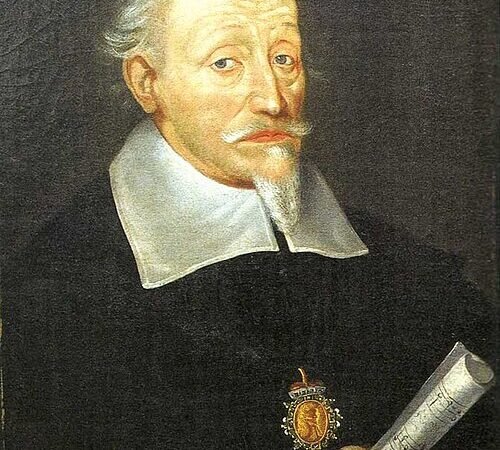
Biography (read more)
Heinrich Schütz was a German composer and organist born 18 October 1585 in Köstritz and died 6 November 1672 in Dresden. Discovered as a child singer by the Landgrave of Hesse-Kassel, he later studied music in Venice under Giovanni Gabrieli before becoming court composer to the Elector of Saxony in Dresden in 1615, a post he held for the rest of his career despite the disruptions of the Thirty Years’ War. Heinrich Schütz is generally regarded as the most important German composer before Johann Sebastian Bach, credited with bringing the Italian polychoral and concertato styles north. His surviving output of over 500 works includes the Psalmen Davids, Musikalische Exequien, and three settings of the Passion.
Schütz was the crucial conduit through which Italian Baroque innovations — polychoral writing, the concertato style, and expressive text-setting — entered German musical life, laying the groundwork for the great German Lutheran choral tradition. His Musikalische Exequien is considered the first German Requiem, and his synthesis of Italian and German styles directly shaped the North German organ and choral schools that culminated in the work of Bach.
Sources:
Repertoire
Psalmen Davids, Op. 21619
Performed by Antigona
Cantiones sacrae, Op. 41625
Performed by Linn Records
Musikalische Exequien1636
Performed by pannonia77
Kleine geistliche Konzerte1636-1639
Performed by johnny5
Symphoniae Sacrae, Op. 10 (Book II)1647
Performed by Rus3ik
Weihnachtshistorie (The Christmas Story), SWV 4351660
Performed by calefonxcalectric
Historia der Auferstehung Jesu Christi, Op. 3, SWV 50: Die Auferstehung unsers Herren— Peter Schreier
Performed by Peter Schreier
Historia der Auferstehung Jesu Christi, Op. 3, SWV 50: Da der Sabbath vergangen war— Peter Schreier
Performed by Peter Schreier
Historia der Auferstehung Jesu Christi, Op. 3, SWV 50: Was suchet ihr den Lebendigen— Peter Schreier
Performed by Peter Schreier
Historia der Auferstehung Jesu Christi, Op. 3, SWV 50: Und sie gedachten an seine Worte— Peter Schreier
Performed by Peter Schreier
Historia der Auferstehung Jesu Christi, Op. 3, SWV 50: Sie haben den Herren weggenommen— Peter Schreier
Performed by Peter Schreier
Historia der Auferstehung Jesu Christi, Op. 3, SWV 50: Da ging Petrus und der ander Jünger hinaus— Peter Schreier
Performed by Peter Schreier
Historia der Auferstehung Jesu Christi, Op. 3, SWV 50: Sie haben meinen Herren weggenommen— Peter Schreier
Performed by Peter Schreier
Historia der Auferstehung Jesu Christi, Op. 3, SWV 50: Und als sie das saget— Peter Schreier
Performed by Peter Schreier
Historia der Auferstehung Jesu Christi, Op. 3, SWV 50: Rühre mich nicht an— Peter Schreier
Performed by Peter Schreier
Historia der Auferstehung Jesu Christi, Op. 3, SWV 50: Dies ist die Maria Magdalena— Peter Schreier
Performed by Peter Schreier
Historia der Auferstehung Jesu Christi, Op. 3, SWV 50: Entsetzt euch nicht!— Peter Schreier
Performed by Peter Schreier
Historia der Auferstehung Jesu Christi, Op. 3, SWV 50: Und sie gingen schnell zum Grabe hinaus— Peter Schreier
Performed by Peter Schreier
Historia der Auferstehung Jesu Christi, Op. 3, SWV 50: Saget, seine Jünger kamen des Nachts— Peter Schreier
Performed by Peter Schreier
Historia der Auferstehung Jesu Christi, Op. 3, SWV 50: Und sie nahmen das Geld— Peter Schreier
Performed by Peter Schreier
Historia der Auferstehung Jesu Christi, Op. 3, SWV 50: Das von Jesu von Nazareth— Peter Schreier
Performed by Peter Schreier
Historia der Auferstehung Jesu Christi, Op. 3, SWV 50: Und er sprach zu ihnen— Peter Schreier
Performed by Peter Schreier
Historia der Auferstehung Jesu Christi, Op. 3, SWV 50: Und fing an von Mose und allen Propheten— Peter Schreier
Performed by Peter Schreier
Historia der Auferstehung Jesu Christi, Op. 3, SWV 50: Bleibe bei uns, denn es will Abend werden— Peter Schreier
Performed by Peter Schreier
Historia der Auferstehung Jesu Christi, Op. 3, SWV 50: Und er ging hinein— Peter Schreier
Performed by Peter Schreier
Historia der Auferstehung Jesu Christi, Op. 3, SWV 50: Brannte nicht unser Herz in uns— Peter Schreier
Performed by Peter Schreier
Historia der Auferstehung Jesu Christi, Op. 3, SWV 50: Der Herr ist wahrhaftig auferstanden— Peter Schreier
Performed by Peter Schreier
Historia der Auferstehung Jesu Christi, Op. 3, SWV 50: Und sie erzählten ihnen— Peter Schreier
Performed by Peter Schreier
Historia der Auferstehung Jesu Christi, Op. 3, SWV 50: Was seid ihr also erschrocken— Peter Schreier
Performed by Peter Schreier
Historia der Auferstehung Jesu Christi, Op. 3, SWV 50: Und als er das saget— Peter Schreier
Performed by Peter Schreier
Historia der Auferstehung Jesu Christi, Op. 3, SWV 50: Dies sind die Reden— Peter Schreier
Performed by Peter Schreier
Historia der Auferstehung Jesu Christi, Op. 3, SWV 50: Da eröffnet er ihnen das Verständnis— Peter Schreier
Performed by Peter Schreier
Historia der Auferstehung Jesu Christi, Op. 3, SWV 50: Und abermal sprach er zu ihnen— Peter Schreier
Performed by Peter Schreier
Historia der Auferstehung Jesu Christi, Op. 3, SWV 50: Nehmet hin den heiligen Geist!— Peter Schreier
Performed by Peter Schreier
Italian Madrigals, Op. 1: O dolcezze amarissimi d’amore, SWV 2— René Jacobs
Performed by René Jacobs
Italian Madrigals, Op. 1: Feritevi, ferite, viperette mordaci, SWV 9— René Jacobs
Performed by René Jacobs
Kleine geistliche Konzerte II, Op. 9, SWV 306-337: Was hast du verwirket, SWV 307— Peter Schreier
Performed by Peter Schreier
Kleine geistliche Konzerte, Pt. 2, Op. 9: Kleiner geistlichen Concerten, Part II, Op. 9, SWV…— Nina Stemme
Performed by Nina Stemme
Kleine geistliche Konzerte II, Op. 9: Habe deine Lust an dem Herren, SWV 311— René Jacobs
Performed by René Jacobs
Kleine geistliche Konzerte II, Op. 9: O Jesu nomen dulce, SWV 308— René Jacobs
Performed by René Jacobs
Kleine geistliche Konzerte II, Op. 9: Herr unser Herrscher, SWV 343— René Jacobs
Performed by René Jacobs
Kleine geistliche Konzerte II, Op. 9: “Was hast du verwirket”, SWV 307— René Jacobs
Performed by René Jacobs
Kleine geistliche Konzerte II, Op. 9: “Herzlich lieb hab ich dich, o Herr”, SWV 348— René Jacobs
Performed by René Jacobs
Kleine geistliche Concerte, Part I, Op. 8, SWV 282-305: Kleiner geistlichen Concerten, Part I,…— Nina Stemme
Performed by Nina Stemme
Kleine geistliche Konzerte I, Op. 8: Wohl dem, der nicht wandelt, SWV 290— René Jacobs
Performed by René Jacobs
Kleine geistliche Konzerte I, Op. 8: Eile, mich, Gott, zu erretten, SWV 282— René Jacobs
Performed by René Jacobs
Kleine geistliche Konzerte I, Op. 8: O süsser, O freundlicher, SWV 285— René Jacobs
Performed by René Jacobs
Kleine geistliche Konzerte I, Op. 8: Bringt her dem Herrn, SWV 283— René Jacobs
Performed by René Jacobs
Kleine geistliche Konzerte I, Op. 8: Ihr Heiligen lobsinget, SWV 288— René Jacobs
Performed by René Jacobs
Symphoniarum sacrarum secunda pars, Op. 10, SWV 341-367: Frohlocket mit Handen, SWV 349— Nina Stemme
Performed by Nina Stemme
Symphoniarum sacrarum secunda pars, Op. 10, SWV 341-367: Der Herr ist meine Starke, SWV 345— Nina Stemme
Performed by Nina Stemme
Symphoniarum sacrarum secunda pars, Op. 10, SWV 341-367: Singet dem Herren ein neues Lied, SWV 342— Nina Stemme
Performed by Nina Stemme
Symphoniae Sacrae II, Op. 10: Was betrübst du dich, meine Seele, SWV 353— René Jacobs
Performed by René Jacobs
Psalmen Davids sampt etlichen Moteten und Concerten, Op. 2, SWV 22-47: Ist nicht Ephraim mein…— Peter Schreier
Performed by Peter Schreier
Psalmen Davids sampt etlichen Moteten und Concerten, Op. 2, SWV 22-47: Nicht uns, Herr, sondern…— Peter Schreier
Performed by Peter Schreier
Psalmen Davids sampt etlichen Moteten und Concerten, Op. 2, SWV 22-47: Die mit Tränen säen,…— Peter Schreier
Performed by Peter Schreier
Psalmen Davids sampt etlichen Moteten und Concerten, Op. 2, SWV 22-47: Wohl dem, der den Herren…— Peter Schreier
Performed by Peter Schreier
Saint Matthew’s Passion, SWV 479: “Da speieten sie aus in sein Angesichte” – Chorus. “Weissage…— Dietrich Fischer-Dieskau
Performed by Dietrich Fischer-Dieskau
Saint Matthew’s Passion, SWV 479: “Da speieten sie aus in sein Angesichte” & “Weissage uns,…— Dietrich Fischer-Dieskau
Performed by Dietrich Fischer-Dieskau
Saint Matthew’s Passion, SWV 479: “Des Morgens aber hielten alle Hohepriester” – Chorus. “Was…— Dietrich Fischer-Dieskau
Performed by Dietrich Fischer-Dieskau
Saint Matthew’s Passion, SWV 479: “Des Morgens aber hielten alle Hohepriester” & “Was gehet es…— Dietrich Fischer-Dieskau
Performed by Dietrich Fischer-Dieskau
Saint Matthew’s Passion, SWV 479: “Und er warf die Silberlinge in den Tempel” – Chorus. “Es…— Dietrich Fischer-Dieskau
Performed by Dietrich Fischer-Dieskau
Saint Matthew’s Passion, SWV 479: “Und er warf die Silberlinge in den Tempel” & “Es taug nicht,…— Dietrich Fischer-Dieskau
Performed by Dietrich Fischer-Dieskau
Saint Matthew’s Passion, SWV 479: “Desgleichen auch die Hohenpriester spotteten” – Chorus….— Dietrich Fischer-Dieskau
Performed by Dietrich Fischer-Dieskau
Saint Matthew’s Passion, SWV 479: “Desgleichen auch die Hohenpriester spotteten” & “Andern hat…— Dietrich Fischer-Dieskau
Performed by Dietrich Fischer-Dieskau
Saint Matthew’s Passion, SWV 479: “Desgleichen schmäheten ihn auch die Mörder” – Chorus. “Der…— Dietrich Fischer-Dieskau
Performed by Dietrich Fischer-Dieskau
Saint Matthew’s Passion, SWV 479: “Desgleichen schmäheten ihn auch die Mörder” & “Der rufet…— Dietrich Fischer-Dieskau
Performed by Dietrich Fischer-Dieskau
Matthäus-Passion, SWV 479: Introitus: “Das Leiden unseres Herren Jesu Christi” (Remastered)— Peter Schreier
Performed by Peter Schreier
Matthäus-Passion, SWV 479: Introitus: “Das Leiden unseres Herren Jesu Christi”— Peter Schreier
Performed by Peter Schreier
Matthäus-Passion, SWV 479: “Ja nicht auf das Fest” (Remastered)— Peter Schreier
Performed by Peter Schreier
Matthäus-Passion, SWV 479: “Wozu dient dieser Unrat?” (Remastered)— Peter Schreier
Performed by Peter Schreier
Matthäus-Passion, SWV 479: “Wo willst du, daß wir dir bereiten” (Remastered)— Peter Schreier
Performed by Peter Schreier
Matthäus-Passion, SWV 479: “Wo willst du, daß wir dir bereiten”— Peter Schreier
Performed by Peter Schreier
Matthäus-Passion, SWV 479: “Herr, bin ichs?” (Remastered)— Peter Schreier
Performed by Peter Schreier
Matthäus-Passion, SWV 479: “In dieser Nacht” (Remastered)— Peter Schreier
Performed by Peter Schreier
Matthäus-Passion, SWV 479: “Und er kam zu seinen Jüngern” (Remastered)— Peter Schreier
Performed by Peter Schreier
Matthäus-Passion, SWV 479: “Und er kam zu seinen Jüngern”— Peter Schreier
Performed by Peter Schreier
Matthäus-Passion, SWV 479: “Stecke dein Schwert an seinen Ort” (Remastered)— Peter Schreier
Performed by Peter Schreier
Matthäus-Passion, SWV 479: “Stecke dein Schwert an seinen Ort”— Peter Schreier
Performed by Peter Schreier
Matthäus-Passion, SWV 479: “Er ist des Todes schuldig!” (Remastered)— Peter Schreier
Performed by Peter Schreier
Matthäus-Passion, SWV 479: “Wahrlich, du bist auch einer” (Remastered)— Peter Schreier
Performed by Peter Schreier
Matthäus-Passion, SWV 479: “Wahrlich, du bist auch einer”— Peter Schreier
Performed by Peter Schreier
Matthäus-Passion, SWV 479: “Was gehet es uns an?” (Remastered)— Peter Schreier
Performed by Peter Schreier
Matthäus-Passion, SWV 479: “Welchen wollet ihr” (Remastered)— Peter Schreier
Performed by Peter Schreier
Matthäus-Passion, SWV 479: “Da antwortete das ganze Volk” (Remastered)— Peter Schreier
Performed by Peter Schreier
Matthäus-Passion, SWV 479: “Da antwortete das ganze Volk”— Peter Schreier
Performed by Peter Schreier
Matthäus-Passion, SWV 479: “Gegrüßet seist du” (Remastered)— Peter Schreier
Performed by Peter Schreier
Matthäus-Passion, SWV 479: “Der du den Tempel Gottes zerbrichst” (Remastered)— Peter Schreier
Performed by Peter Schreier
Matthäus-Passion, SWV 479: “Der du den Tempel Gottes zerbrichst”— Peter Schreier
Performed by Peter Schreier
Matthäus-Passion, SWV 479: “Der rufet den Elias!” (Remastered)— Peter Schreier
Performed by Peter Schreier
Matthäus-Passion, SWV 479: “Wahrlich, dieser ist Gottes Sohn gewesen” (Remastered)— Peter Schreier
Performed by Peter Schreier
Matthäus-Passion, SWV 479: “Wahrlich, dieser ist Gottes Sohn gewesen”— Peter Schreier
Performed by Peter Schreier
Matthäus-Passion, SWV 479: “Herr, wir haben gedacht” (Remastered)— Peter Schreier
Performed by Peter Schreier
Matthäus-Passion, SWV 479: Beschluss: “Ehre sei dir Christe” (Remastered)— Peter Schreier
Performed by Peter Schreier
Matthäus-Passion, SWV 479: Beschluss: “Ehre sei dir Christe”— Peter Schreier
Performed by Peter Schreier
Symphoniae sacrae, Op. 6, SWV 257-276: Fili mi, Absalon, SWV 269— Nina Stemme
Performed by Nina Stemme
Kleine geistliche Konzerte II, Op. 9: No. 9, Verbum caro factum, SWV 314— Dietrich Fischer-Dieskau
Performed by Dietrich Fischer-Dieskau
Saint Matthew’s Passion, SWV 479: Introit. “Das Leiden unsers Herren Jesu Christi” (Choir)— Dietrich Fischer-Dieskau
Performed by Dietrich Fischer-Dieskau
Saint Matthew’s Passion, SWV 479: “Und es begab sich” (Evangelist, Jesus)— Dietrich Fischer-Dieskau
Performed by Dietrich Fischer-Dieskau
Saint Matthew’s Passion, SWV 479: “Ja nicht, nicht auf das Fest” (Choir)— Dietrich Fischer-Dieskau
Performed by Dietrich Fischer-Dieskau
Saint Matthew’s Passion, SWV 479: “Da nun Jesus war zu Bethanien” (Evangelist)— Dietrich Fischer-Dieskau
Performed by Dietrich Fischer-Dieskau
Saint Matthew’s Passion, SWV 479: “Wozu dienet dieser Unrat?” (Choir)— Dietrich Fischer-Dieskau
Performed by Dietrich Fischer-Dieskau
Saint Matthew’s Passion, SWV 479: “Da das Jesus merkete” (Evangelist, Jesus, Judas)— Dietrich Fischer-Dieskau
Performed by Dietrich Fischer-Dieskau
Saint Matthew’s Passion, SWV 479: “Wo willst du, dass wir dir bereiten” (Choir)— Dietrich Fischer-Dieskau
Performed by Dietrich Fischer-Dieskau
Saint Matthew’s Passion, SWV 479: “Er sprach” – Chorus. “Herr, bin ich’s?” (Evangelist, Jesus,…— Dietrich Fischer-Dieskau
Performed by Dietrich Fischer-Dieskau
Saint Matthew’s Passion, SWV 479: “Er antwortete und sprach” – Duet. “Er hat gesaget”…— Dietrich Fischer-Dieskau
Performed by Dietrich Fischer-Dieskau
Saint Matthew’s Passion, SWV 479: “Und der Hohepriester stund auf” – Chorus. “Er ist des Todes…— Dietrich Fischer-Dieskau
Performed by Dietrich Fischer-Dieskau
Saint Matthew’s Passion, SWV 479: “Petrus aber sass draussen im Palast” (Evangelist, First…— Dietrich Fischer-Dieskau
Performed by Dietrich Fischer-Dieskau
Saint Matthew’s Passion, SWV 479: “Wahrlich, du, du bist auch einer” (Choir)— Dietrich Fischer-Dieskau
Performed by Dietrich Fischer-Dieskau
Saint Matthew’s Passion, SWV 479: “Da hub er an sich zu verfluchen und zu schwören”…— Dietrich Fischer-Dieskau
Performed by Dietrich Fischer-Dieskau
Saint Matthew’s Passion, SWV 479: “Sie hielten aber einen Rat” – Chorus. “Lass ihn kreuzigen”…— Dietrich Fischer-Dieskau
Performed by Dietrich Fischer-Dieskau
Saint Matthew’s Passion, SWV 479: “Ich bin unschuldig” – Chorus. “Sein Blut komme über uns”…— Dietrich Fischer-Dieskau
Performed by Dietrich Fischer-Dieskau
Saint Matthew’s Passion, SWV 479: “Da gab er ihnen Barrabam los” – Chorus. “Gegrüsset seist du”…— Dietrich Fischer-Dieskau
Performed by Dietrich Fischer-Dieskau
Saint Matthew’s Passion, SWV 479: “Und speieten ihn an” – Chorus. “Der du den Tempel Gottes…— Dietrich Fischer-Dieskau
Performed by Dietrich Fischer-Dieskau
Saint Matthew’s Passion, SWV 479: “Und bald lief einer unter ihnen” – Chorus. “Halt, halt,…— Dietrich Fischer-Dieskau
Performed by Dietrich Fischer-Dieskau
Saint Matthew’s Passion, SWV 479: “Aber Jesus schrei abermal laut” – Chorus. “Wahrlich, dieser…— Dietrich Fischer-Dieskau
Performed by Dietrich Fischer-Dieskau
Saint Matthew’s Passion, SWV 479: “Und es waren viel Weiber da” (Evangelist)— Dietrich Fischer-Dieskau
Performed by Dietrich Fischer-Dieskau
Saint Matthew’s Passion, SWV 479: “Herr, wir haben gedacht” (Choir)— Dietrich Fischer-Dieskau
Performed by Dietrich Fischer-Dieskau
Saint Matthew’s Passion, SWV 479: “Pilatus aber sprach zu ihnen” (Evangelist, Pilate, Choir)— Dietrich Fischer-Dieskau
Performed by Dietrich Fischer-Dieskau
Saint Matthew’s Passion, SWV 479: “Conclusion. “Ehre sei dir, Christe”” (Choir)— Dietrich Fischer-Dieskau
Performed by Dietrich Fischer-Dieskau
Saint Matthew’s Passion, SWV 479: “Das Leiden unsers Herren Jesu Christi” (Choir)— Dietrich Fischer-Dieskau
Performed by Dietrich Fischer-Dieskau
Saint Matthew’s Passion, SWV 479: “Er sprach” – “Herr, bin ich’s?” (Evangelist, Jesus, Choir)— Dietrich Fischer-Dieskau
Performed by Dietrich Fischer-Dieskau
Saint Matthew’s Passion, SWV 479: “Er antwortete und sprach” & “Er hat gesaget” (Evangelist,…— Dietrich Fischer-Dieskau
Performed by Dietrich Fischer-Dieskau
Saint Matthew’s Passion, SWV 479: “Und der Hohepriester stund auf” & “Er ist des Todes…— Dietrich Fischer-Dieskau
Performed by Dietrich Fischer-Dieskau
Saint Matthew’s Passion, SWV 479: “Sie hielten aber einen Rat” & “Da aber Pilatus sahe, dass er…— Dietrich Fischer-Dieskau
Performed by Dietrich Fischer-Dieskau
Saint Matthew’s Passion, SWV 479: “Ich bin unschuldig” & “Sein Blut komme über uns”…— Dietrich Fischer-Dieskau
Performed by Dietrich Fischer-Dieskau
Saint Matthew’s Passion, SWV 479: “Da gab er ihnen Barrabam los” & “Gegrüsset seist du”…— Dietrich Fischer-Dieskau
Performed by Dietrich Fischer-Dieskau
Saint Matthew’s Passion, SWV 479: “Und speieten ihn an” & “Der du den Tempel Gottes zerbrichst”…— Dietrich Fischer-Dieskau
Performed by Dietrich Fischer-Dieskau
Saint Matthew’s Passion, SWV 479: “Und bald lief einer unter ihnen” & “Halt, halt, lasst sehen”…— Dietrich Fischer-Dieskau
Performed by Dietrich Fischer-Dieskau
Saint Matthew’s Passion, SWV 479: “Aber Jesus schrei abermal laut” & “Wahrlich, dieser ist…— Dietrich Fischer-Dieskau
Performed by Dietrich Fischer-Dieskau
Saint Matthew’s Passion, SWV 479: “Ehre sei dir, Christe” (Choir)— Dietrich Fischer-Dieskau
Performed by Dietrich Fischer-Dieskau
Schütz: Matthäus Passion: Das Leiden unsers Herren Jesu Christi— Dietrich Fischer-Dieskau
Performed by Dietrich Fischer-Dieskau
Schütz: Matthäus Passion: Und es begab sich— Dietrich Fischer-Dieskau
Performed by Dietrich Fischer-Dieskau
Schütz: Matthäus Passion: Ja nicht, nicht auf das Fest— Dietrich Fischer-Dieskau
Performed by Dietrich Fischer-Dieskau
Schütz: Matthäus Passion: Da nun Jesus war zu Bethanien— Dietrich Fischer-Dieskau
Performed by Dietrich Fischer-Dieskau
Schütz: Matthäus Passion: Wozu dienet dieser Unrat?— Dietrich Fischer-Dieskau
Performed by Dietrich Fischer-Dieskau
Schütz: Matthäus Passion: Da das Jesus merkete— Dietrich Fischer-Dieskau
Performed by Dietrich Fischer-Dieskau
Schütz: Matthäus Passion: Wo willst du, daß wir dir bereiten— Dietrich Fischer-Dieskau
Performed by Dietrich Fischer-Dieskau
Schütz: Matthäus Passion: Er sprach: Gehet hin— Dietrich Fischer-Dieskau
Performed by Dietrich Fischer-Dieskau
Schütz: Matthäus Passion: Herr, bin ich’s?— Dietrich Fischer-Dieskau
Performed by Dietrich Fischer-Dieskau
Schütz: Matthäus Passion: Er antwortete und sprach— Dietrich Fischer-Dieskau
Performed by Dietrich Fischer-Dieskau
Schütz: Matthäus Passion: Er hat gesaget: Ich kann den Tempel Gottes abbrechen— Dietrich Fischer-Dieskau
Performed by Dietrich Fischer-Dieskau
Schütz: Matthäus Passion: Und der Hohepriester stund auf— Dietrich Fischer-Dieskau
Performed by Dietrich Fischer-Dieskau
Schütz: Matthäus Passion: Er ist des Todes schuldig!— Dietrich Fischer-Dieskau
Performed by Dietrich Fischer-Dieskau
Schütz: Matthäus Passion: Da speieten sie aus in sein Angesichte— Dietrich Fischer-Dieskau
Performed by Dietrich Fischer-Dieskau
Schütz: Matthäus Passion: Weissage uns, weissage uns, Christe— Dietrich Fischer-Dieskau
Performed by Dietrich Fischer-Dieskau
Schütz: Matthäus Passion: Petrus aber saß draußen im Palast— Dietrich Fischer-Dieskau
Performed by Dietrich Fischer-Dieskau
Schütz: Matthäus Passion: Wahrlich, du, du bist auch einer— Dietrich Fischer-Dieskau
Performed by Dietrich Fischer-Dieskau
Schütz: Matthäus Passion: Da hub er an sich zu verfluchen und zu schwören— Dietrich Fischer-Dieskau
Performed by Dietrich Fischer-Dieskau
Schütz: Matthäus Passion: Des Morgens aber hielten alle Hohepriester— Dietrich Fischer-Dieskau
Performed by Dietrich Fischer-Dieskau
Schütz: Matthäus Passion: Was gehet es uns an?— Dietrich Fischer-Dieskau
Performed by Dietrich Fischer-Dieskau
Schütz: Matthäus Passion: Und er warf die Silberlinge in den Tempel— Dietrich Fischer-Dieskau
Performed by Dietrich Fischer-Dieskau
Schütz: Matthäus Passion: Es taug nicht, daß wir sie in den Gotteskasten legen— Dietrich Fischer-Dieskau
Performed by Dietrich Fischer-Dieskau
Schütz: Matthäus Passion: Sie hielten aber einen Rat— Dietrich Fischer-Dieskau
Performed by Dietrich Fischer-Dieskau
Schütz: Matthäus Passion: Pilatus sprach zu ihnen— Dietrich Fischer-Dieskau
Performed by Dietrich Fischer-Dieskau
Schütz: Matthäus Passion: Laß ihn kreuzigen!— Dietrich Fischer-Dieskau
Performed by Dietrich Fischer-Dieskau
Schütz: Matthäus Passion: Da aber Pilatus sahe, daß er nichts schaffete— Dietrich Fischer-Dieskau
Performed by Dietrich Fischer-Dieskau
Schütz: Matthäus Passion: Sein Blut komme über uns— Dietrich Fischer-Dieskau
Performed by Dietrich Fischer-Dieskau
Schütz: Matthäus Passion: Da gab er ihnen Barrabam los— Dietrich Fischer-Dieskau
Performed by Dietrich Fischer-Dieskau
Schütz: Matthäus Passion: Gegrüßet seist du— Dietrich Fischer-Dieskau
Performed by Dietrich Fischer-Dieskau
Schütz: Matthäus Passion: Und speieten ihn an— Dietrich Fischer-Dieskau
Performed by Dietrich Fischer-Dieskau
Schütz: Matthäus Passion: Der du den Tempel Gottes zerbrichst— Dietrich Fischer-Dieskau
Performed by Dietrich Fischer-Dieskau
Schütz: Matthäus Passion: Desgleichen auch die Hohenpriester spotteten— Dietrich Fischer-Dieskau
Performed by Dietrich Fischer-Dieskau
Schütz: Matthäus Passion: Andern hat er geholfen— Dietrich Fischer-Dieskau
Performed by Dietrich Fischer-Dieskau
Schütz: Matthäus Passion: Desgleichen schmäheten ihn auch die Mörder— Dietrich Fischer-Dieskau
Performed by Dietrich Fischer-Dieskau
Schütz: Matthäus Passion: Der rufet den Elias— Dietrich Fischer-Dieskau
Performed by Dietrich Fischer-Dieskau
Schütz: Matthäus Passion: Und bald lief einer unter ihnen— Dietrich Fischer-Dieskau
Performed by Dietrich Fischer-Dieskau
Schütz: Matthäus Passion: Halt, halt, laßt sehen— Dietrich Fischer-Dieskau
Performed by Dietrich Fischer-Dieskau
Schütz: Matthäus Passion: Aber Jesus schrey abermal laut— Dietrich Fischer-Dieskau
Performed by Dietrich Fischer-Dieskau
Schütz: Matthäus Passion: Wahrlich, dieser ist Gottessohn gewesen— Dietrich Fischer-Dieskau
Performed by Dietrich Fischer-Dieskau
Schütz: Matthäus Passion: Und es waren viel Weiber da— Dietrich Fischer-Dieskau
Performed by Dietrich Fischer-Dieskau
Schütz: Matthäus Passion: Herr, wir haben gedacht— Dietrich Fischer-Dieskau
Performed by Dietrich Fischer-Dieskau
Schütz: Matthäus Passion: Pilatus aber sprach zu ihnen— Dietrich Fischer-Dieskau
Performed by Dietrich Fischer-Dieskau
Schütz: Matthäus Passion: Ehre sei dir, Christe— Dietrich Fischer-Dieskau
Performed by Dietrich Fischer-Dieskau
Schütz: Geistliche Chormusik, Op. 11: No. 11, So fahr ich hin zu Jesu Christ, SWV 379— Peter Schreier
Performed by Peter Schreier
Kleine geistliche Konzerte I, Op. 8, SWV 282-305: No. 13. Eins bitte ich vom Herren, SWV 294— Peter Schreier
Performed by Peter Schreier
Johannes-Passion, SWV 481: Introitus: “Das Leiden unsers Herren Jesu”— Peter Schreier
Performed by Peter Schreier
Johannes-Passion, SWV 481: “Bist du nicht auch dieses Menschen Jünger einer?”— Peter Schreier
Performed by Peter Schreier
Johannes-Passion, SWV 481: “Bist du nicht seiner Jünger einer?”— Peter Schreier
Performed by Peter Schreier
Johannes-Passion, SWV 481: “Wäre dieser nicht ein Übeltäter”— Peter Schreier
Performed by Peter Schreier
Johannes-Passion, SWV 481: “Auf daß erfüllet würde das Wort Jesu”— Peter Schreier
Performed by Peter Schreier
Johannes-Passion, SWV 481: “Da schrieen sie wieder allesamt”— Peter Schreier
Performed by Peter Schreier
Johannes-Passion, SWV 481: “Sei gegrüßet, lieber Judenkönig”— Peter Schreier
Performed by Peter Schreier
Johannes-Passion, SWV 481: “Von dem an trachtete Pilatus”— Peter Schreier
Performed by Peter Schreier
Johannes-Passion, SWV 481: “Die Hohenpriester antworteten”— Peter Schreier
Performed by Peter Schreier
Johannes-Passion, SWV 481: “Da sprachen die Hohenpriester – Schreibe nicht: Der Judenkönig”— Peter Schreier
Performed by Peter Schreier
Johannes-Passion, SWV 481: “Auf daß erfüllet würde die Schrift”— Peter Schreier
Performed by Peter Schreier
Johannes-Passion, SWV 481: “O hilf, Christe, Gottes Sohn”— Peter Schreier
Performed by Peter Schreier
Musikalische Exequien: Concert in Form einer teutschen Begräbnis-Missa, SWV 279— Peter Schreier
Performed by Peter Schreier
Musikalische Exequien: Motette “Herr, wenn ich nur dich habe”, SWV 280— Peter Schreier
Performed by Peter Schreier
Musikalische Exequien: Canticum B. Simeonis “Herr, nun lässest du deinen Diener in Frieden…— Peter Schreier
Performed by Peter Schreier
Lukas-Passion, SWV 480: Introitus: Das Leiden unsers Herren Jesu Christi— Peter Schreier
Performed by Peter Schreier
Lukas-Passion, SWV 480: Es war aber nahe das Fest der süßen Brot— Peter Schreier
Performed by Peter Schreier
Lukas-Passion, SWV 480: Wo willst du, dass wir es bereiten?— Peter Schreier
Performed by Peter Schreier
Lukas-Passion, SWV 480: Herr, siehe, hier sind zwei Schwert— Peter Schreier
Performed by Peter Schreier
Lukas-Passion, SWV 480: Herr, sollen wir mit dem Schwert dreinschlagen?— Peter Schreier
Performed by Peter Schreier
Lukas-Passion, SWV 480: Weissage, wer ist, der dich schlug?— Peter Schreier
Performed by Peter Schreier
Lukas-Passion, SWV 480: Pilatus aber fragte ihn und sprach— Peter Schreier
Performed by Peter Schreier
Lukas-Passion, SWV 480: Es war auch oben über ihm geschrieben— Peter Schreier
Performed by Peter Schreier
Lukas-Passion, SWV 480: Beschluss: Wer Gottes Marter in Ehren hat— Peter Schreier
Performed by Peter Schreier
Symphoniae sacrae III, Op. 12: Symphoniarum sacrarum III, Op. 12: No. 18, Saul, Saul, was…— John Eliot Gardiner
Performed by John Eliot Gardiner
Ich beschwöre euch, ihr Töchter zu Jerusalem, SWV 339— John Eliot Gardiner
Performed by John Eliot Gardiner
Mein Sohn, warum hast du uns das getan, Op. 12 No. 4, SWV 401— John Eliot Gardiner
Performed by John Eliot Gardiner
Weihnachts-Historie: Evangelist “Es begab sich aber zu derselbigen Zeit”— René Jacobs
Performed by René Jacobs
Weihnachts-Historie: Evangelist “Und alsbald war da bei dem Engel”— René Jacobs
Performed by René Jacobs
Weihnachts-Historie: Die Menge der Engel “Ehre sei Gott in der Höhe”— René Jacobs
Performed by René Jacobs
Weihnachts-Historie: Evangelist “Und da die Engel von ihnen gen Himmel fuhren”— René Jacobs
Performed by René Jacobs
Weihnachts-Historie: Die Hirten auf dem Felde “Lasset uns nun gehen gen Bethlehem”— René Jacobs
Performed by René Jacobs
Weihnachts-Historie: Die Weisen aus Morgenlande “Wo ist der neugeborne König der Juden?”— René Jacobs
Performed by René Jacobs
Weihnachts-Historie: Evangelist “Da das der König Herodes hörete”— René Jacobs
Performed by René Jacobs
Weihnachts-Historie: Hohepriester und Schriftgelehrte “Zu Bethlehem im jüdischen Lande”— René Jacobs
Performed by René Jacobs
Weihnachts-Historie: Evangelist “Da berief Herodes die Weisen”— René Jacobs
Performed by René Jacobs
Weihnachts-Historie: Evangelist “Als sie nun den König gehöret hatten”— René Jacobs
Performed by René Jacobs
Kleine geistliche Konzerte II: Hodie Christus natus est, SWV 315— René Jacobs
Performed by René Jacobs
Kleine geistliche Konzerte I: Eile mich, Gott, zu erretten SWV 282— René Jacobs
Performed by René Jacobs
Italian Madrigals, Op. 1, Book I: O primavera, SWV 1— Konrad Junghänel
Performed by Konrad Junghänel
Italian Madrigals, Op. 1, Book I: Selve beate, SWV 3— Konrad Junghänel
Performed by Konrad Junghänel
Italian Madrigals, Op. 1, Book I: Alma afflita, SWV 4— Konrad Junghänel
Performed by Konrad Junghänel
Italian Madrigals, Op. 1, Book I: Così morir debb’io, SWV 5— Konrad Junghänel
Performed by Konrad Junghänel
Italian Madrigals, Op. 1, Book I: D’orrida selce alpina, SWV 6— Konrad Junghänel
Performed by Konrad Junghänel
Italian Madrigals, Op. 1, Book I: Ride la primavera, SWV 7— Konrad Junghänel
Performed by Konrad Junghänel
Italian Madrigals, Op. 1, Book I: Fuggi o mio core, SWV 8— Konrad Junghänel
Performed by Konrad Junghänel
Italian Madrigals, Op. 1, Book I: Feritevi, ferite, SWV 9— Konrad Junghänel
Performed by Konrad Junghänel
Italian Madrigals, Op. 1, Book I: Fiamma ch’allacia, SWV 10— Konrad Junghänel
Performed by Konrad Junghänel
Italian Madrigals, Op. 1, Book I: Quella dama son io, SWV 11— Konrad Junghänel
Performed by Konrad Junghänel
Italian Madrigals, Op. 1, Book I: Io moro, eccho ch’io moro, SWV 13— Konrad Junghänel
Performed by Konrad Junghänel
Italian Madrigals, Op. 1, Book I: Sospir che del bel petto, SWV 14— Konrad Junghänel
Performed by Konrad Junghänel
Italian Madrigals, Op. 1, Book I: Dunque addio, SWV 15— Konrad Junghänel
Performed by Konrad Junghänel
Italian Madrigals, Op. 1, Book I: Tornate, o cari baci, SWV 16— Konrad Junghänel
Performed by Konrad Junghänel
Italian Madrigals, Op. 1, Book I: Di marmo siete voi, SWV 17— Konrad Junghänel
Performed by Konrad Junghänel
Italian Madrigals, Op. 1, Book I: Giunto è pur, Lidia, SWV 18— Konrad Junghänel
Performed by Konrad Junghänel
Psalmen Davids: I. Zion spricht: der Herr hat mich verlassen, swv 46— Konrad Junghänel
Performed by Konrad Junghänel
Psalmen Davids: II. Ach Herr, straf mich nicht in deinem Zorn, swv 24— Konrad Junghänel
Performed by Konrad Junghänel
Psalmen Davids: III. Ich freue mich des, das mir geredt ist, swv 26— Konrad Junghänel
Performed by Konrad Junghänel
Psalmen Davids: IV. Wie lieblich sind deine Wohnungen, swv 29— Konrad Junghänel
Performed by Konrad Junghänel
Psalmen Davids: VI. An den Wassern zu Babel sassen wir, swv 37— Konrad Junghänel
Performed by Konrad Junghänel
Psalmen Davids: VIII. Danket dem Herren, denn er ist freundlich, swv 45— Konrad Junghänel
Performed by Konrad Junghänel
Psalmen Davids: X. Jauchzet dem Herren, alle Welt, swv 47— Konrad Junghänel
Performed by Konrad Junghänel
Psalmen Davids: XI. Wohl dem, der den Herren fürchtet, swv 30— Konrad Junghänel
Performed by Konrad Junghänel
Psalmen Davids: XII. Jauchzet dem Herrn, alle Welt, swv 36— Konrad Junghänel
Performed by Konrad Junghänel
Psalmen Davids: XIII. Ist nicht Ephraim mein teurer Sohn, swv 40— Konrad Junghänel
Performed by Konrad Junghänel
Psalmen Davids: XIV. Alleluja! Lobet den Herren, swv 38— Konrad Junghänel
Performed by Konrad Junghänel
Psalmen Davids: XV. Ich danke dem Herrn von ganzem Herzen, swv 34— Konrad Junghänel
Performed by Konrad Junghänel
Psalmen Davids: XVI. Lobe den Herren, meine Seele, swv 39— Konrad Junghänel
Performed by Konrad Junghänel
Psalmen Davids: XVII. Wohl dem, der den Herren fürchtet, swv 44— Konrad Junghänel
Performed by Konrad Junghänel
Psalmen Davids: XVIII. Nun lob, mein Seel, den Herren, swv 41— Konrad Junghänel
Performed by Konrad Junghänel
Psalmen Davids: XIX. Der Herr sprach zu meinem Herrn, swv 22— Konrad Junghänel
Performed by Konrad Junghänel
Psalmen Davids: XX. Aus der Tiefe ruf ich, Herr, zu dir, swv 25— Konrad Junghänel
Performed by Konrad Junghänel
Psalmen Davids: XXII. Wohl dem, der nicht wandelt, swv 28— Konrad Junghänel
Performed by Konrad Junghänel
Psalmen Davids: XXIII. Ich hebe meine Augen auf zu den Bergen, swv 31— Konrad Junghänel
Performed by Konrad Junghänel
Psalmen Davids: XXIV. Danket dem Herrn, denn er ist freundlich, swv 32— Konrad Junghänel
Performed by Konrad Junghänel
Psalmen Davids: XXV. Singet dem Herrn ein neues Lied, swv 35— Konrad Junghänel
Performed by Konrad Junghänel
Psalmen Davids: XXVI. Nicht uns, Herr, sondern deinem Namen, swv 43— Konrad Junghänel
Performed by Konrad Junghänel
Symphoniae Sacrae III, Op. 12, SWV 398: Der Herr ist mein Hirt— Konrad Junghänel
Performed by Konrad Junghänel
Symphoniae Sacrae III, Op. 12, SWV 399: Ich hebe meine Augen auf— Konrad Junghänel
Performed by Konrad Junghänel
Symphoniae Sacrae III, Op. 12, SWV 400: Wo der Herr nicht das Haus bauet— Konrad Junghänel
Performed by Konrad Junghänel
Symphoniae Sacrae III, Op. 12, SWV 401: Mein Sohn, warum hast Du uns das getan— Konrad Junghänel
Performed by Konrad Junghänel
Symphoniae Sacrae III, Op. 12, SWV 402: O Herr, hilf— Konrad Junghänel
Performed by Konrad Junghänel
Symphoniae Sacrae III, Op. 12, SWV 403: Siehe, es erschien der Engel des Herren— Konrad Junghänel
Performed by Konrad Junghänel
Symphoniae Sacrae III, Op. 12, SWV 404: Feget den alten Sauerteig aus— Konrad Junghänel
Performed by Konrad Junghänel
Symphoniae Sacrae III, Op. 12, SWV 405: O süßer Jesu Christ— Konrad Junghänel
Performed by Konrad Junghänel
Symphoniae Sacrae III, Op. 12, SWV 406 : O Jesu süß, wer dein gedenkt— Konrad Junghänel
Performed by Konrad Junghänel
Symphoniae Sacrae III, Op. 12, SWV 407: Lasset uns doch den Herren unsern Gott, loben— Konrad Junghänel
Performed by Konrad Junghänel
Symphoniae Sacrae III, Op. 12, SWV 408: Es ging ein Sämann aus— Konrad Junghänel
Performed by Konrad Junghänel
Symphoniae Sacrae III, Op. 12, SWV 409: Seid barmherzig— Konrad Junghänel
Performed by Konrad Junghänel
Symphoniae Sacrae III, Op. 12, SWV 410: Siehe, dieser wird gesetzt zu einem Fall— Konrad Junghänel
Performed by Konrad Junghänel
Symphoniae Sacrae III, Op. 12, SWV 412: Siehe, wie fein und lieblich— Konrad Junghänel
Performed by Konrad Junghänel
Symphoniae Sacrae III, Op. 12, SWV 414: Meister, wir wissen, daß du wahrhaftig bist— Konrad Junghänel
Performed by Konrad Junghänel
Symphoniae Sacrae III, Op. 12, SWV 415: Saul, Saul, was verfolgst du mich— Konrad Junghänel
Performed by Konrad Junghänel
Symphoniae Sacrae III, Op. 12, SWV 416: Herr, wie lang willst du mein so gar vergessen— Konrad Junghänel
Performed by Konrad Junghänel
Symphoniae Sacrae III, Op. 12, SWV 417 : Komm heiliger Geist, Herre Gott— Konrad Junghänel
Performed by Konrad Junghänel
Symphoniae Sacrae III, Op. 12, SWV 418: Nun danket alle Gott— Konrad Junghänel
Performed by Konrad Junghänel
Kleine geistliche Konzerte II, Op. 9: “O Jesu, nomen dulce”, SWV 308— Andreas Scholl
Performed by Andreas Scholl
Kleine geistliche Konzerte II, Op. 9: “Herzlich lieb hab ich dich, o Herr”, SWV 348— Andreas Scholl
Performed by Andreas Scholl
Kleine geistliche Konzerte II, Op. 9: “Was hast du verwirket”, SWV 307— Andreas Scholl
Performed by Andreas Scholl
Italian Madrigals, Book I: O dolcezze amarissime, SWV 2— Konrad Junghänel
Performed by Konrad Junghänel
Symphoniae sacrae III, Op. 12: No. 12, Es ging ein Sämmen auss, SWV 408— Joel Cohen
Performed by Joel Cohen