Biography (read more)
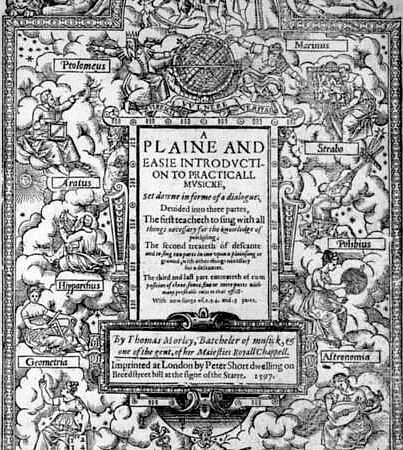
Thomas Morley was an English composer, theorist, and organist born around 1557 in Norwich and died in 1602 in London, celebrated as the leading figure of the English Madrigal School. A pupil of William Byrd, he served as master of choristers at Norwich Cathedral before moving to London, where he became organist at St Paul’s Cathedral and, from 1598, held a royal monopoly on music printing. Inspired by Nicholas Yonge’s 1588 anthology Musica Transalpina, Morley began publishing his own English madrigals and balletts, adapting the Italian style he especially admired in Luca Marenzio into a lighter, distinctly English idiom. He also wrote instrumental consort music and the influential treatise A Plain and Easie Introduction to Practicall Musicke (1597).
Morley almost single-handedly grafted the Italian madrigal onto English soil, launching the brief but brilliant flowering of the English Madrigal School. His treatise became the standard English-language guide to Renaissance music theory and performance for two centuries, and his own light, singable madrigals such as “Now Is the Month of Maying” remain core repertory. As a music publisher he also helped shape the wider dissemination of English music in print.
Sources:
Repertoire
April Is in My Mistress’ Face1594
Performed by La Ménestraudie, Choral Society of Durham
Now Is the Month of Maying1595
Performed by Rockport Music, John Rutter & The Cambridge Singers
Sing We and Chant It1595
Performed by Ars Nova Copenhagen
The First Booke of Consort Lessons1599
Performed by EARLY MUSIC MIDI
It Was a Lover and His Lass1600
Performed by mutewoman2
It Was a Lover and His Lass— Ian Bostridge
Performed by Ian Bostridge
Ayres or Little Short Songs: No. 8, O Mistress Mine— Ian Bostridge
Performed by Ian Bostridge
Morley: It was a lover and his lasse— Barbara Bonney
Performed by Barbara Bonney
Nolo mortem peccatoris— John Eliot Gardiner
Performed by John Eliot Gardiner
Galiarda— Vincent Dumestre
Performed by Vincent Dumestre
Morley: It was a lover and his lasse— Julian Bream
Performed by Julian Bream
Thirsis and Milla— Julian Bream
Performed by Julian Bream
Thirsis and Milla— Nigel North
Performed by Nigel North
Morley: Come, sorrow, come— Julian Bream
Performed by Julian Bream
Come sorrow come— Nigel North
Performed by Nigel North
Morley: With My Love, My Life Was Nestled— Julian Bream
Performed by Julian Bream
With my love my life was nestled— Nigel North
Performed by Nigel North
Ayres, Book 1: No. 14, Absence, Hear Thou My Protestation— Julian Bream
Performed by Julian Bream
Ayres, Book 1: No. 22, Pavane— Julian Bream
Performed by Julian Bream
Ayres, Book 1: No. 7, Who Is It That This Dark Night— Julian Bream
Performed by Julian Bream
Mistress Mine, Well May You Fare— Julian Bream
Performed by Julian Bream
Pavan— Julian Bream
Performed by Julian Bream
The Sacred End Pavin and Galliard: Pavin— Julian Bream
Performed by Julian Bream
The Sacred End Pavin and Galliard: Galliard— Julian Bream
Performed by Julian Bream
Absence— Julian Bream
Performed by Julian Bream
Who Is It?— Julian Bream
Performed by Julian Bream
Morley: O mistress mine— Julian Bream
Performed by Julian Bream
Morley: Thyrsis And Milla— Julian Bream
Performed by Julian Bream
Morley: I Saw My Ladye Weeping— Julian Bream
Performed by Julian Bream
Morley: What If My Mistress Now— Julian Bream
Performed by Julian Bream
A painted tale— Nigel North
Performed by Nigel North
I saw my lady weeping— Nigel North
Performed by Nigel North
Who is it that this dark night— Nigel North
Performed by Nigel North
Can I forget what reasons force— Nigel North
Performed by Nigel North
Absence, hear thou my protestation— Nigel North
Performed by Nigel North
Morley: I Saw My Ladye Weeping— Anthony Rooley
Performed by Anthony Rooley
It was a Lover and His Lass— Stephen Stubbs
Performed by Stephen Stubbs
Morley: Lute music – England: Pavan— Konrad Ragossnig
Performed by Konrad Ragossnig
Deep Lamenting— Anthony Rooley
Performed by Anthony Rooley
Leave Now Mine Eyes— Anthony Rooley
Performed by Anthony Rooley
Morley: Madrigals: Arise, Awake, You Silly Shepherds Sleeping— Anthony Rooley
Performed by Anthony Rooley
Morley: Madrigals: Besides A Fountain— Anthony Rooley
Performed by Anthony Rooley
Morley: Madrigals: No, No, No, Nigella— Anthony Rooley
Performed by Anthony Rooley
Morley: Madrigals: Singing Alone— Anthony Rooley
Performed by Anthony Rooley
Morley: Ayres: With My Love— Anthony Rooley
Performed by Anthony Rooley
Morley: Ayres: Mistress Mine— Anthony Rooley
Performed by Anthony Rooley
Morley: Madrigals: Stay Heart, Run Not So Fast— Anthony Rooley
Performed by Anthony Rooley
Morley: Madrigals: Fire And Lightening— Anthony Rooley
Performed by Anthony Rooley
Morley: Madrigals: Phyllis, I Fain Would Die Now— Anthony Rooley
Performed by Anthony Rooley
Morley: Madrigals: Hard By A Crystal Fountain— Anthony Rooley
Performed by Anthony Rooley
Morley: Madrigals: In Every Place— Anthony Rooley
Performed by Anthony Rooley
Morley: Madrigals: O Grief E’en On The Bud— Anthony Rooley
Performed by Anthony Rooley
Morley: Ayres: Absence Hear— Anthony Rooley
Performed by Anthony Rooley
Morley: Madrigals: Deep Lamenting— Anthony Rooley
Performed by Anthony Rooley
Morley: Ayres: Sleep Slumb’ring Eyes— Anthony Rooley
Performed by Anthony Rooley
Morley: Madrigals: Hark! Alleluia— Anthony Rooley
Performed by Anthony Rooley
Varietie of Lute Lessons, 1610: Pavin No. 3. Composed by the excellent Musition Thomas Morley…— Matthew Wadsworth
Performed by Matthew Wadsworth
Mistress Mine Well May Fou Fare— Stephen Stubbs
Performed by Stephen Stubbs
Sweet nymph, come to thy lover— Desmond Dupré
Performed by Desmond Dupré
I go before my darling— Desmond Dupré
Performed by Desmond Dupré
Miraculous Love’s wounding— Desmond Dupré
Performed by Desmond Dupré
First Book of Ballets: No. 4, Sing We and Chant It— Joel Cohen
Performed by Joel Cohen