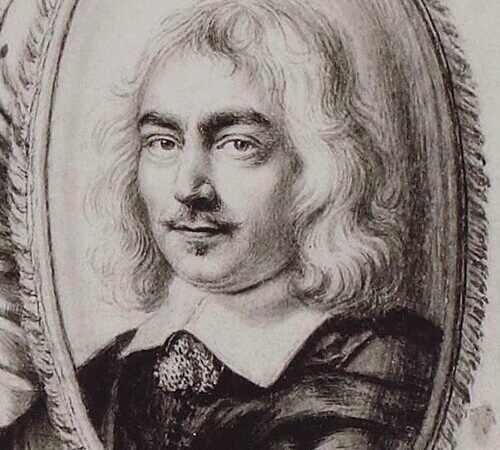
Biography (read more)
Denis Gaultier was a French lutenist and composer born in Paris, though sources differ on whether his birth year was 1597 or 1603; he died in 1672. A cousin of the lutenist Ennemond Gaultier, Denis Gaultier’s career was so closely intertwined with his older cousin’s early on that contemporaries often referred to either man simply as ‘Gaultier,’ making no attempt to distinguish between them. Unlike many court musicians of his era, Denis Gaultier held no official court position, instead building his reputation through private salon performances for the Parisian aristocracy. His principal legacy is the manuscript collection La Rhétorique des dieux, compiled between roughly 1648 and 1652, containing fifty-six pieces arranged into suites spanning eleven of the twelve traditional modes.
Denis Gaultier stands as one of the supreme masters of the French Baroque lute, and his intricately contrapuntal, non-metrical dance suites crystallized the style brisé, the arpeggiated ‘broken style’ that later shaped François Couperin and the great French harpsichordists. His La Rhétorique des dieux, with its allegorical mode-suites, became a model for the Baroque suite’s internal logic and helped elevate lute music to a status of art comparable to poetry and rhetoric.
Sources:
Repertoire
Apollon Orateurc. 1652
Performed by Yuichi Sasaki
Prélude & Orphéec. 1652 (La Rhétorique des dieux)
Performed by Caius Hera
La réthorique des dieux, Suite No. 12 in A Minor: I. Prélude— Hopkinson Smith
Performed by Hopkinson Smith
La réthorique des dieux, Suite No. 12 in A Minor: II. Pavane— Hopkinson Smith
Performed by Hopkinson Smith
La réthorique des dieux, Suite No. 12 in A Minor: III. Narcisse— Hopkinson Smith
Performed by Hopkinson Smith
La réthorique des dieux, Suite No. 12 in A Minor: IV. La pastorale— Hopkinson Smith
Performed by Hopkinson Smith
La réthorique des dieux, Suite No. 12 in A Minor: V. Lunon ou la Ialouse— Hopkinson Smith
Performed by Hopkinson Smith
La réthorique des dieux, Suite No. 12 in A Minor: VI. Sarabande— Hopkinson Smith
Performed by Hopkinson Smith
La réthorique des dieux, Suite No. 12 in A Minor: VII. Tombeau de monsieur de l’Enclos— Hopkinson Smith
Performed by Hopkinson Smith
La réthorique des dieux, Suite No. 12 in A Minor: VIII. La consolation aux amis du saint enclos— Hopkinson Smith
Performed by Hopkinson Smith
La réthorique des dieux, Suite No. 12 in A Minor: IX. La résolution des amis du saint Lenclos…— Hopkinson Smith
Performed by Hopkinson Smith
La réthorique des dieux, Suite No. 1 in D Major: I. Prélude— Hopkinson Smith
Performed by Hopkinson Smith
La réthorique des dieux, Suite No. 1 in D Major: II. La dédicace— Hopkinson Smith
Performed by Hopkinson Smith
La réthorique des dieux, Suite No. 1 in D Major: III. Phäeton foudroyé— Hopkinson Smith
Performed by Hopkinson Smith
La réthorique des dieux, Suite No. 1 in D Major: IV. Le panégririque— Hopkinson Smith
Performed by Hopkinson Smith
La réthorique des dieux, Suite No. 1 in D Major: V. Minerve— Hopkinson Smith
Performed by Hopkinson Smith
La réthorique des dieux, Suite No. 1 in D Major: VI. Ulisse— Hopkinson Smith
Performed by Hopkinson Smith
La réthorique des dieux, Suite No. 1 in D Major: VII. Sarabande— Hopkinson Smith
Performed by Hopkinson Smith
La réthorique des dieux, Suite No. 2 in A Major: I. Prélude— Hopkinson Smith
Performed by Hopkinson Smith
La réthorique des dieux, Suite No. 2 in A Major: II. Andromède— Hopkinson Smith
Performed by Hopkinson Smith
La réthorique des dieux, Suite No. 2 in A Major: III. Diane— Hopkinson Smith
Performed by Hopkinson Smith
La réthorique des dieux, Suite No. 2 in A Major: IV. La coquette virtuosa— Hopkinson Smith
Performed by Hopkinson Smith
La réthorique des dieux, Suite No. 2 in A Major: V. Gigue— Hopkinson Smith
Performed by Hopkinson Smith
La réthorique des dieux, Suite No. 2 in A Major: VI. Atalante— Hopkinson Smith
Performed by Hopkinson Smith
La réthorique des dieux, Suite No. 2 in A Major: VII. Sarabande— Hopkinson Smith
Performed by Hopkinson Smith
Pièces en Sol Majeur: II. Pavane ou Tombeau de Mr. Raquette— Anthony Bailes
Performed by Anthony Bailes
Pièces de luth sur trois différents modes, Suite No. 2 en sol: Courante I— Anthony Bailes
Performed by Anthony Bailes
Pièces de luth sur trois différents modes, Suite No. 2 en sol: Courante II— Anthony Bailes
Performed by Anthony Bailes
Pièces en Si Mineur: II. Allemande grave (Tombeau de Gautier par luy mesme)— Anthony Bailes
Performed by Anthony Bailes
Pièces de luth sur trois différents modes, Suite No. 2 en sol: Prélude— Anthony Bailes
Performed by Anthony Bailes
Pièces de luth sur trois différents modes, Suite No. 2 en sol: Gigue— Anthony Bailes
Performed by Anthony Bailes
Pièces de luth sur trois différents modes, Suite No. 2 en sol: Canarie— Anthony Bailes
Performed by Anthony Bailes
Pièces de luth sur trois différents modes, Suite No. 2 en sol: Sarabande— Anthony Bailes
Performed by Anthony Bailes
Livre de tablature des pièces de luth, Suite No. 2 en ré: Prélude— Anthony Bailes
Performed by Anthony Bailes
Livre de tablature des pièces de luth, Suite No. 2 en ré: Allemande— Anthony Bailes
Performed by Anthony Bailes
Livre de tablature des pièces de luth, Suite No. 2 en ré: Courante III— Anthony Bailes
Performed by Anthony Bailes
Livre de tablature des pièces de luth, Suite No. 2 en ré: Sarabande II— Anthony Bailes
Performed by Anthony Bailes
La Rhétorique des Dieux: Suite in A major: La Coquette virtuosa— Lutz Kirchhof
Performed by Lutz Kirchhof
Suite in A Minor: ‘La Resolution Des Amis Du S’lenclos Sur Sa Mort’— Toyohiko Satoh
Performed by Toyohiko Satoh
Gaultier: La rhétorique des dieux / Suite No. 1 en ré majeur – 1. La Dedicasse (Pavane)— Louis Pernot
Performed by Louis Pernot
Gaultier: La rhétorique des dieux / Suite No. 1 en ré majeur – 2. Phaeton foudroyé (Allemande)— Louis Pernot
Performed by Louis Pernot
Gaultier: La rhétorique des dieux / Suite No. 1 en ré majeur – 3. Le Panégirique (Gigue)— Louis Pernot
Performed by Louis Pernot
Gaultier: La rhétorique des dieux / Suite No. 1 en ré majeur – 4. Minerve (Courante)— Louis Pernot
Performed by Louis Pernot
Gaultier: La rhétorique des dieux / Suite No. 1 en ré majeur – 5. Ulisse (Courante et double)— Louis Pernot
Performed by Louis Pernot
Gaultier: La rhétorique des dieux / Suite No. 1 en ré majeur – 6. Sarabande— Louis Pernot
Performed by Louis Pernot
Gaultier: La rhétorique des dieux / Suite No. 2 en la majeur – 1. Prélude— Louis Pernot
Performed by Louis Pernot
Gaultier: La rhétorique des dieux / Suite No. 2 en la majeur – 2. Andromède (Allemande)— Louis Pernot
Performed by Louis Pernot
Gaultier: La rhétorique des dieux / Suite No. 2 en la majeur – 3. Diane (Courante)— Louis Pernot
Performed by Louis Pernot
Gaultier: La rhétorique des dieux / Suite No. 2 en la majeur – 4. La Coquette virtuosa (Courante)— Louis Pernot
Performed by Louis Pernot
Gaultier: La rhétorique des dieux / Suite No. 2 en la majeur – 5. Gigue— Louis Pernot
Performed by Louis Pernot
Gaultier: La rhétorique des dieux / Suite No. 2 en la majeur – 6. Atalante (Gigue)— Louis Pernot
Performed by Louis Pernot
Gaultier: La rhétorique des dieux / Suite No. 2 en la majeur – 7. Chaconne en rondeau— Louis Pernot
Performed by Louis Pernot
Gaultier: La rhétorique des dieux / Suite No. 3 en fa dièse mineur – 1. Tombeau de…— Louis Pernot
Performed by Louis Pernot
Gaultier: La rhétorique des dieux / Suite No. 3 en fa dièse mineur – 2. Rondeau— Louis Pernot
Performed by Louis Pernot
Gaultier: La rhétorique des dieux / Suite No. 3 en fa dièse mineur – 3. Mars superbe (Gaillarde)— Louis Pernot
Performed by Louis Pernot
Gaultier: La rhétorique des dieux / Suite No. 3 en fa dièse mineur – 4. Cléopatre amante…— Louis Pernot
Performed by Louis Pernot
Gaultier: La rhétorique des dieux / Suite No. 3 en fa dièse mineur – 5. Sarabande— Louis Pernot
Performed by Louis Pernot
Gaultier: La rhétorique des dieux / Suite No. 4 en fa dièse mineur – 1. Artemise ou l’Oraison…— Louis Pernot
Performed by Louis Pernot
Gaultier: La rhétorique des dieux / Suite No. 4 en fa dièse mineur – 2. Le Triomphe (Courante)— Louis Pernot
Performed by Louis Pernot
Gaultier: La rhétorique des dieux / Suite No. 4 en fa dièse mineur – 3. Volte— Louis Pernot
Performed by Louis Pernot
Gaultier: La rhétorique des dieux / Suite No. 4 en fa dièse mineur – 4. Gigue I— Louis Pernot
Performed by Louis Pernot
Gaultier: La rhétorique des dieux / Suite No. 4 en fa dièse mineur – 5. Gigue II— Louis Pernot
Performed by Louis Pernot
Gaultier: La rhétorique des dieux / Suite No. 5 en ré majeur – 1. Allemande— Louis Pernot
Performed by Louis Pernot
Gaultier: La rhétorique des dieux / Suite No. 5 en ré majeur – 2. Courante et double I— Louis Pernot
Performed by Louis Pernot
Gaultier: La rhétorique des dieux / Suite No. 5 en ré majeur – 3. Courante et double II— Louis Pernot
Performed by Louis Pernot
Gaultier: La rhétorique des dieux / Suite No. 5 en ré majeur – 4. Courante et double III— Louis Pernot
Performed by Louis Pernot
Gaultier: La rhétorique des dieux / Suite No. 5 en ré majeur – 5. Sarabande— Louis Pernot
Performed by Louis Pernot
Gaultier: La rhétorique des dieux / Suite No. 6 en fa majeur – 1. Appolon orateur (Allemande)— Louis Pernot
Performed by Louis Pernot
Gaultier: La rhétorique des dieux / Suite No. 6 en fa majeur – 2. Courante I— Louis Pernot
Performed by Louis Pernot
Gaultier: La rhétorique des dieux / Suite No. 6 en fa majeur – 3. Courante II et double— Louis Pernot
Performed by Louis Pernot
Gaultier: La rhétorique des dieux / Suite No. 6 en fa majeur – 4. Sarabande— Louis Pernot
Performed by Louis Pernot
Gaultier: La rhétorique des dieux / Suite No. 7 en fa majeur – 1. Allemande— Louis Pernot
Performed by Louis Pernot
Gaultier: La rhétorique des dieux / Suite No. 7 en fa majeur – 2. La Caressante (Courante)— Louis Pernot
Performed by Louis Pernot
Gaultier: La rhétorique des dieux / Suite No. 7 en fa majeur – 3. Canarie— Louis Pernot
Performed by Louis Pernot
Gaultier: La rhétorique des dieux / Suite No. 8 en sol mineur – 1. Circé (Pavane)— Louis Pernot
Performed by Louis Pernot
Gaultier: La rhétorique des dieux / Suite No. 8 en sol mineur – 2. Céphale (Courante)— Louis Pernot
Performed by Louis Pernot
Gaultier: La rhétorique des dieux / Suite No. 8 en sol mineur – 3. Sarabande— Louis Pernot
Performed by Louis Pernot
Gaultier: La rhétorique des dieux / Suite No. 9 en sol mineur – 1. L’Héroique (Allemande)— Louis Pernot
Performed by Louis Pernot
Gaultier: La rhétorique des dieux / Suite No. 9 en sol mineur – 2. Courante— Louis Pernot
Performed by Louis Pernot
Gaultier: La rhétorique des dieux / Suite No. 10 en la mineur – 1. Prélude— Louis Pernot
Performed by Louis Pernot
Gaultier: La rhétorique des dieux / Suite No. 10 en la mineur – 2. Orphée (Allemande)— Louis Pernot
Performed by Louis Pernot
Gaultier: La rhétorique des dieux / Suite No. 10 en la mineur – 3. Echo (Gigue)— Louis Pernot
Performed by Louis Pernot
Gaultier: La rhétorique des dieux / Suite No. 10 en la mineur – 4. Courante— Louis Pernot
Performed by Louis Pernot
Gaultier: La rhétorique des dieux / Suite No. 10 en la mineur – 5. L’Homicide (Courante “La…— Louis Pernot
Performed by Louis Pernot
Gaultier: La rhétorique des dieux / Suite No. 10 en la mineur – 6. Sarabande— Louis Pernot
Performed by Louis Pernot
Gaultier: La rhétorique des dieux / Suite No. 10 en la mineur – 7. La Gaillarde— Louis Pernot
Performed by Louis Pernot
Gaultier: La rhétorique des dieux / Suite No. 10 en la mineur – 8. Courante et double “La…— Louis Pernot
Performed by Louis Pernot
Gaultier: La rhétorique des dieux / Suite No. 11 en la mineur – 1. Pavane— Louis Pernot
Performed by Louis Pernot
Gaultier: La rhétorique des dieux / Suite No. 11 en la mineur – 2. La Pastorale (Gigue)— Louis Pernot
Performed by Louis Pernot
Gaultier: La rhétorique des dieux / Suite No. 11 en la mineur – 3. Narcisse (Courante “La…— Louis Pernot
Performed by Louis Pernot
Gaultier: La rhétorique des dieux / Suite No. 11 en la mineur – 4. Junon ou La Jalouse (Courante)— Louis Pernot
Performed by Louis Pernot
Gaultier: La rhétorique des dieux / Suite No. 11 en la mineur – 5. Volte— Louis Pernot
Performed by Louis Pernot
Gaultier: La rhétorique des dieux / Suite No. 12 en la mineur – 1. Tombeau de Monsieur de…— Louis Pernot
Performed by Louis Pernot
Gaultier: La rhétorique des dieux / Suite No. 12 en la mineur – 2. La Consolation aux amis du…— Louis Pernot
Performed by Louis Pernot
Gaultier: La rhétorique des dieux / Suite No. 12 en la mineur – 3. La Résolution des amis du…— Louis Pernot
Performed by Louis Pernot
Pièces in G Minor (Excerpts) : Ouverture de la grotte de Versailles— Shigeo Mito
Performed by Shigeo Mito