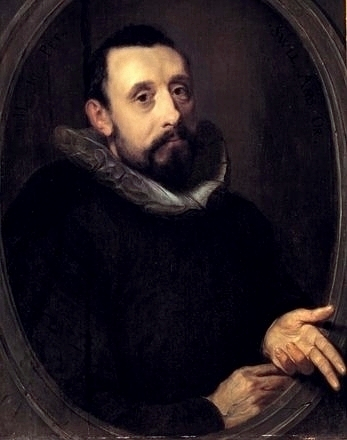
Biography (read more)
Jan Pieterszoon Sweelinck was a Dutch composer, organist, and teacher born in April or May 1562 in Deventer and died 16 October 1621 in Amsterdam. He succeeded his father as organist of the Oude Kerk in Amsterdam around 1580 and held that post for the rest of his life, becoming known as the “Orpheus of Amsterdam” for his celebrated improvisations. Jan Pieterszoon Sweelinck’s work straddled the end of the Renaissance and the beginning of the Baroque, and as a teacher he trained the core figures of the north German organ school, including Samuel Scheidt and Heinrich Scheidemann, earning him the nickname “maker of organists.” He also composed over 250 vocal works, including chansons, madrigals, and psalm settings.
Sweelinck represents the pinnacle of Dutch keyboard composition before Bach, pioneering the developed organ fugue and advanced contrapuntal techniques such as stretto and pedal points used as independent voices. Through his many German pupils, his teaching directly seeded the North German organ tradition that would culminate a century later in the work of Johann Sebastian Bach.
Sources:
Repertoire
Mein junges Leben hat ein End, SwWV 324c. 1600
Performed by Leonart Music
Ballo del Granduca, SwWV 319c. 1600
Performed by Ton Koopman
Echo Fantasia, SwWV 260c. 1600
Performed by TheOneAndOnlyZeno
Fantasia Chromatica, SwWV 258c. 1610
Performed by Pierre-François Dub-Attenti
Variations on “Est-ce Mars”c. 1610
Performed by Heriberto Raymundo Moreno Baeza
Psalm 137 (Genevan Psalter setting)c. 1613-1621
Performed by My Life With Early Music
Sweelinck: Cantiones Sacrae: No. 9, Venite exultemus Domino, SwWV 159— Peter Schreier
Performed by Peter Schreier