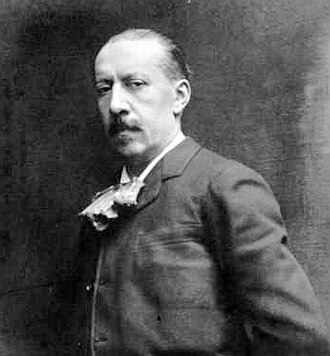
Biography (read more)
Charles-Marie-Jean-Albert Widor was a French organist, composer, and teacher of the late Romantic era, born 21 February 1844 in Lyon to a family of organ builders and died 12 March 1937 in Paris. Appointed organist of Saint-Sulpice in Paris in January 1870 at age 25, he held the post for nearly 64 years, playing the Cavaillé-Coll organ that inspired much of his output, and later succeeded César Franck as organ professor and then Théodore Dubois as composition professor at the Paris Conservatoire, teaching students including Louis Vierne, Marcel Dupré, and Albert Schweitzer. He was a pioneer of the ‘organ symphony,’ writing ten works under that title that exploited the newly orchestral tonal resources of Cavaillé-Coll’s instruments; the ninth of these, the Symphonie gothique, Op. 70 (1895), draws its thematic material from Gregorian plainchant and honours the Gothic Church of St Ouen in Rouen.
Widor was the central figure in the late-19th-century revival of French organ music, effectively inventing the ‘organ symphony’ as a genre suited to the newly orchestral tonal palette of Cavaillé-Coll’s organs and setting the model followed by Vierne, Dupré, and other successors. Beyond his own compositions, his 63-year tenure at Saint-Sulpice and decades of teaching at the Conservatoire gave him outsized influence over French organ pedagogy and performance practice for generations.
Sources:
Repertoire
Symphonie pour orgue No. 9 “Gothique,” Op. 701895
Performed by Münchner Rundfunkorchester
Widor: Cello Sonata in A Major, Op. 80: I. Allegro moderato— Bengt Forsberg
Performed by Bengt Forsberg
Widor: Cello Sonata in A Major, Op. 80: II. Andante con moto— Bengt Forsberg
Performed by Bengt Forsberg
Widor: Cello Sonata in A Major, Op. 80: III. Allegro vivace— Bengt Forsberg
Performed by Bengt Forsberg