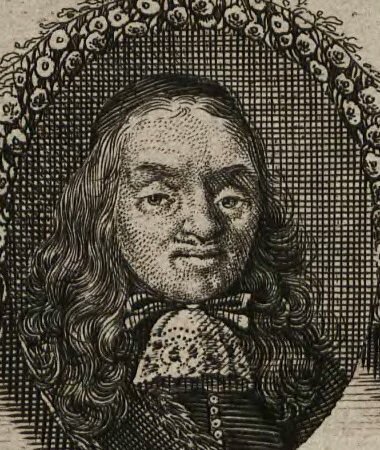
Biography (read more)
Esaias Reusner was a German lutenist and composer, born on 29 April 1636 in Löwenberg, Silesia. Taught by his lutenist father of the same name, he was a child prodigy who toured and performed at various courts from an early age. From 1655 to 1672 he served the dukes of Silesia at Brieg, and briefly taught flute and lute at the University of Leipzig. In 1674 he was appointed chamber lutenist to Frederick William, Elector of Brandenburg, in Berlin, a post he held until his death on 1 May 1679. He published two influential collections, Deliciae Testudinis (1667) and Neue Lauten-Früchte (1676), each built from dance suites for solo lute.
Esaias Reusner was one of the first great German masters of the eleven-course baroque lute and the first German composer to fully adopt the French style of lute-suite writing. His two published collections helped establish the instrumental suite as a genre in German-speaking lands and prepared the ground for the flowering of German baroque lute music that Weiss and his contemporaries later brought to its height.
Sources:
Repertoire
Suite No. 1 (from Delitiae Testudinis, oder Erfreuliche Lauten-Lust)1667
Performed by Baroque Goes Nuts
Suite in B-flat major1667/1676
Performed by Byron Colby
Suite XIII in E-flat major (Delitiae Testudinis)1667
Performed by Baroque Room
Passacaglia in D majorc. 1670s
Performed by LUTEDUO
Suite in D minor (from Neue Lauten-Früchte)1676
Performed by Baroque Room
Lute Suites (selections)— Konrad Junghänel
Performed by Konrad Junghänel
Padoana— Jakob Lindberg
Performed by Jakob Lindberg
Lute Suite in G Minor: I. Allemande (Live)— Julian Bream
Performed by Julian Bream
Lute Suite in G Minor: II. Courante (Live)— Julian Bream
Performed by Julian Bream
Lute Suite in G Minor: III. Sarabande (Live)— Julian Bream
Performed by Julian Bream
Lute Suite in G Minor: IV. Aria (Live)— Julian Bream
Performed by Julian Bream
Lute Suite in G Minor: V. Gigue (Live)— Julian Bream
Performed by Julian Bream
Suite for Lute in C minor: Sarabanda— Konrad Junghänel
Performed by Konrad Junghänel
Suite for Lute in C minor: Sarabanda— Konrad Junghänel
Performed by Konrad Junghänel
Suite for Lute in D minor: Praeludium— Konrad Junghänel
Performed by Konrad Junghänel
Suite for Lute in D minor: Paduana— Konrad Junghänel
Performed by Konrad Junghänel
Suite for Lute in D minor: Allemanda— Konrad Junghänel
Performed by Konrad Junghänel
Suite for Lute in D minor: Couranta— Konrad Junghänel
Performed by Konrad Junghänel
Suite for Lute in D minor: Sarabanda— Konrad Junghänel
Performed by Konrad Junghänel
Suite for Lute in D minor: Gavotte— Konrad Junghänel
Performed by Konrad Junghänel
Suite for Lute in D minor: Gigue— Konrad Junghänel
Performed by Konrad Junghänel
Suite for Lute in C minor: Allemanda— Konrad Junghänel
Performed by Konrad Junghänel
Suite for Lute in C minor: Courant— Konrad Junghänel
Performed by Konrad Junghänel
Suite for Lute in C minor: Gavotte— Konrad Junghänel
Performed by Konrad Junghänel
Suite for Lute in C minor: Gigue— Konrad Junghänel
Performed by Konrad Junghänel
Suite for Lute in D major: Sonatina— Konrad Junghänel
Performed by Konrad Junghänel
Suite for Lute in D major: Allemanda— Konrad Junghänel
Performed by Konrad Junghänel
Suite for Lute in D major: Courant— Konrad Junghänel
Performed by Konrad Junghänel
Suite for Lute in D major: Sarabanda— Konrad Junghänel
Performed by Konrad Junghänel
Suite for Lute in D major: Gavotte— Konrad Junghänel
Performed by Konrad Junghänel
Suite for Lute in D major: Gigue— Konrad Junghänel
Performed by Konrad Junghänel
Suite for Lute in D major: Passacaglia— Konrad Junghänel
Performed by Konrad Junghänel
Suite for Lute in G minor: Allemanda— Konrad Junghänel
Performed by Konrad Junghänel
Suite for Lute in G minor: Courant— Konrad Junghänel
Performed by Konrad Junghänel
Suite for Lute in G minor: Sarabanda— Konrad Junghänel
Performed by Konrad Junghänel
Suite for Lute in G minor: Aria I— Konrad Junghänel
Performed by Konrad Junghänel
Suite for Lute in G minor: Aria II— Konrad Junghänel
Performed by Konrad Junghänel
Suite for Lute in G minor: Ballett— Konrad Junghänel
Performed by Konrad Junghänel
Suite for Lute in G minor: Gigue— Konrad Junghänel
Performed by Konrad Junghänel
Suite for Lute in C minor: Paduana— Konrad Junghänel
Performed by Konrad Junghänel
Suite for Lute in C minor: Couranta— Konrad Junghänel
Performed by Konrad Junghänel
Suite for Lute in E minor: Allemanda— Konrad Junghänel
Performed by Konrad Junghänel
Suite for Lute in E minor: Couranta— Konrad Junghänel
Performed by Konrad Junghänel
Suite for Lute in E minor: Sarabanda— Konrad Junghänel
Performed by Konrad Junghänel
Suite for Lute in E minor: Gigue— Konrad Junghänel
Performed by Konrad Junghänel
Delitiae testudinis Suite No. 9 in G Minor: I. Praeludium— Paul Beier
Performed by Paul Beier
Delitiae testudinis Suite No. 9 in G Minor: II. Paduana— Paul Beier
Performed by Paul Beier
Delitiae testudinis Suite No. 9 in G Minor: III. Allemanda— Paul Beier
Performed by Paul Beier
Delitiae testudinis Suite No. 9 in G Minor: IV. Couranta— Paul Beier
Performed by Paul Beier
Delitiae testudinis Suite No. 9 in G Minor: V. Sarabanda— Paul Beier
Performed by Paul Beier
Delitiae testudinis Suite No. 9 in G Minor: VI. Gavotta— Paul Beier
Performed by Paul Beier
Delitiae testudinis Suite No. 9 in G Minor: VII. Gigue— Paul Beier
Performed by Paul Beier
Delitiae testudinis Suite No. 1 in D Minor: I. Praeludium— Paul Beier
Performed by Paul Beier
Delitiae testudinis Suite No. 1 in D Minor: II. Paduana— Paul Beier
Performed by Paul Beier
Delitiae testudinis Suite No. 1 in D Minor: III. Allemanda— Paul Beier
Performed by Paul Beier
Delitiae testudinis Suite No. 1 in D Minor: V. Sarabanda I— Paul Beier
Performed by Paul Beier
Delitiae testudinis Suite No. 1 in D Minor: VII. Gavotte— Paul Beier
Performed by Paul Beier
Delitiae testudinis Suite No. 1 in D Minor: VIII. Sarabanda II— Paul Beier
Performed by Paul Beier
Delitiae testudinis Suite No. 12 in B-Flat Major: I. Paduana— Paul Beier
Performed by Paul Beier
Delitiae testudinis Suite No. 12 in B-Flat Major: II. Allemanda— Paul Beier
Performed by Paul Beier
Delitiae testudinis Suite No. 12 in B-Flat Major: III. Couranta— Paul Beier
Performed by Paul Beier
Delitiae testudinis Suite No. 12 in B-Flat Major: IV. Sarabanda— Paul Beier
Performed by Paul Beier
Delitiae testudinis Suite No. 12 in B-Flat Major: V. Gavotte— Paul Beier
Performed by Paul Beier
Delitiae testudinis Suite No. 12 in B-Flat Major: VI. Gigue— Paul Beier
Performed by Paul Beier
Delitiae testudinis Suite No. 4 in A Minor: I. Paduana— Paul Beier
Performed by Paul Beier
Delitiae testudinis Suite No. 4 in A Minor: II. Allemanda— Paul Beier
Performed by Paul Beier
Delitiae testudinis Suite No. 4 in A Minor: III. Couranta— Paul Beier
Performed by Paul Beier
Delitiae testudinis Suite No. 4 in A Minor: IV. Sarabanda— Paul Beier
Performed by Paul Beier
Delitiae testudinis Suite No. 4 in A Minor: V. Gavotte— Paul Beier
Performed by Paul Beier
Delitiae testudinis Suite No. 4 in A Minor: VI. Gigue— Paul Beier
Performed by Paul Beier
Delitiae testudinis Suite No. 13 in E-Flat Major: I. Paduana— Paul Beier
Performed by Paul Beier
Delitiae testudinis Suite No. 13 in E-Flat Major: II. Allemanda— Paul Beier
Performed by Paul Beier
Delitiae testudinis Suite No. 13 in E-Flat Major: III. Couranta— Paul Beier
Performed by Paul Beier
Delitiae testudinis Suite No. 13 in E-Flat Major: IV. Sarabanda— Paul Beier
Performed by Paul Beier
Delitiae testudinis Suite No. 13 in E-Flat Major: V. Gavotte— Paul Beier
Performed by Paul Beier
Delitiae testudinis Suite No. 13 in E-Flat Major: VI. Gigue— Paul Beier
Performed by Paul Beier
Delitiae testudinis Suite No. 11 in C Minor: I. Paduana— Paul Beier
Performed by Paul Beier
Delitiae testudinis Suite No. 11 in C Minor: II. Allemanda— Paul Beier
Performed by Paul Beier
Delitiae testudinis Suite No. 11 in C Minor: III. Couranta— Paul Beier
Performed by Paul Beier
Delitiae testudinis Suite No. 11 in C Minor: IV. Sarabanda— Paul Beier
Performed by Paul Beier
Delitiae testudinis Suite No. 11 in C Minor: V. Gigue— Paul Beier
Performed by Paul Beier
Suite in D Minor: I. Praeludium— Lutz Kirchhof
Performed by Lutz Kirchhof
Suite in D Minor: II. Paduan— Lutz Kirchhof
Performed by Lutz Kirchhof
Suite in D Minor: III. Sarabanda— Lutz Kirchhof
Performed by Lutz Kirchhof
Suite in D Minor: IV. Gigue— Lutz Kirchhof
Performed by Lutz Kirchhof
Suite in D Minor: V. Gavotte— Lutz Kirchhof
Performed by Lutz Kirchhof
Delitiae testudinis Suite No. 14 in F Minor: I. Allemanda— Paul Beier
Performed by Paul Beier
Delitiae testudinis Suite No. 14 in F Minor: II. Couranta— Paul Beier
Performed by Paul Beier
Delitiae testudinis Suite No. 14 in F Minor: III. Sarabanda— Paul Beier
Performed by Paul Beier
Delitiae testudinis Suite No. 14 in F Minor: IV. Gigue— Paul Beier
Performed by Paul Beier
Suite in G Minor: I. Allemanda— Lutz Kirchhof
Performed by Lutz Kirchhof
Suite in G Minor: II. Couranta— Lutz Kirchhof
Performed by Lutz Kirchhof
Suite in G Minor: III. Sarabanda— Lutz Kirchhof
Performed by Lutz Kirchhof
Suite in G Minor: IV. Gigue— Lutz Kirchhof
Performed by Lutz Kirchhof
Delitiae testudinis Suite No. 2 in F Major: II. Paduana— Paul Beier
Performed by Paul Beier
Delitiae testudinis Suite No. 2 in F Major: VI. Gavotte— Paul Beier
Performed by Paul Beier
Delitiae testudinis Suite No. 2 in F Major: VII. Gigue— Paul Beier
Performed by Paul Beier
Delitiae testudinis Suite No. 10 in G Minor: II. Couranta— Paul Beier
Performed by Paul Beier
Delitiae testudinis Suite No. 10 in G Minor: IV. Gigue— Paul Beier
Performed by Paul Beier
Delitiae testudinis Suite No. 6 in E Minor: I. Allemanda— Paul Beier
Performed by Paul Beier
Suite in C minor: Paduana— Lutz Kirchhof
Performed by Lutz Kirchhof
Suite in C minor: Allemanda— Lutz Kirchhof
Performed by Lutz Kirchhof
Suite in C minor: Couranta— Lutz Kirchhof
Performed by Lutz Kirchhof
Suite in C minor: Sarabanda— Lutz Kirchhof
Performed by Lutz Kirchhof
Suite in C minor: Gigue— Lutz Kirchhof
Performed by Lutz Kirchhof
I. Praeludium— Joachim Held
Performed by Joachim Held
II. Paduana— Joachim Held
Performed by Joachim Held
III. Allemande— Joachim Held
Performed by Joachim Held
VI. Gigue— Joachim Held
Performed by Joachim Held
Allemanda G Minor— Toyohiko Satoh
Performed by Toyohiko Satoh
Suite in B-Flat Major: Praeludium— Toyohiko Satoh
Performed by Toyohiko Satoh
Suite in B-Flat Major: Sonatina— Toyohiko Satoh
Performed by Toyohiko Satoh
Suite in B-Flat Major: Allemanda— Toyohiko Satoh
Performed by Toyohiko Satoh
Suite in B-Flat Major: Courant— Toyohiko Satoh
Performed by Toyohiko Satoh
Suite in B-Flat Major: Sarabanda— Toyohiko Satoh
Performed by Toyohiko Satoh
Suite in B-Flat Major: Aria— Toyohiko Satoh
Performed by Toyohiko Satoh
Suite in B-Flat Major: Gigue— Toyohiko Satoh
Performed by Toyohiko Satoh
Suite in B-Flat Major: Ciacona— Toyohiko Satoh
Performed by Toyohiko Satoh
Suite in A Minor: Allemanda— Toyohiko Satoh
Performed by Toyohiko Satoh
Suite in A Minor: Sarabanda— Toyohiko Satoh
Performed by Toyohiko Satoh
Suite in A Minor: Aria— Toyohiko Satoh
Performed by Toyohiko Satoh
Suite in G Minor: Allemanda— Toyohiko Satoh
Performed by Toyohiko Satoh
Suite in G Minor: Courante— Toyohiko Satoh
Performed by Toyohiko Satoh
Suite in G Minor: Sarabanda— Toyohiko Satoh
Performed by Toyohiko Satoh
Suite in G Minor: Aria— Toyohiko Satoh
Performed by Toyohiko Satoh
Suite in G Minor: Gigue— Toyohiko Satoh
Performed by Toyohiko Satoh
Suite in G Minor: Aria II— Toyohiko Satoh
Performed by Toyohiko Satoh
Suite in D Major: Sonatina— Toyohiko Satoh
Performed by Toyohiko Satoh
Suite in D Major: Allemande— Toyohiko Satoh
Performed by Toyohiko Satoh
Suite in D Major: Courant— Toyohiko Satoh
Performed by Toyohiko Satoh
Suite in D Major: Sarabanda— Toyohiko Satoh
Performed by Toyohiko Satoh
Suite in D Major: Gavotte— Toyohiko Satoh
Performed by Toyohiko Satoh
Suite in D Major: Gigue— Toyohiko Satoh
Performed by Toyohiko Satoh
Suite in D Major: Passagalia— Toyohiko Satoh
Performed by Toyohiko Satoh
Suite in D Major: I. Allemande— Shigeo Mito
Performed by Shigeo Mito
Suite in D Major: II. Courante— Shigeo Mito
Performed by Shigeo Mito
Suite in D Major: III. Sarabande— Shigeo Mito
Performed by Shigeo Mito
Suite in D Major: IV. Gavotte— Shigeo Mito
Performed by Shigeo Mito
Suite in D Major: V. Gigue— Shigeo Mito
Performed by Shigeo Mito
Suite in D Major: VI. Passagalia— Shigeo Mito
Performed by Shigeo Mito