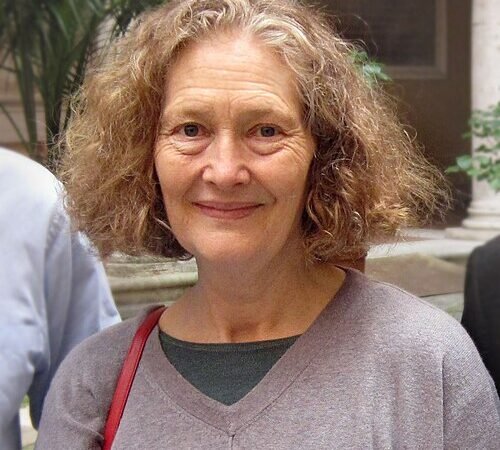
Biography (read more)
Emma Kirkby was born Carolyn Emma Kirkby on 26 February 1949 in Camberley, Surrey, England. She studied classics at Somerville College, Oxford, and did not originally train as a singer, teaching school before being drawn into the early music revival of the 1970s. Emma Kirkby became a leading soloist with ensembles including the Taverner Consort and Players under Andrew Parrott, the Consort of Musicke with Anthony Rooley, and Christopher Hogwood’s Academy of Ancient Music. Renowned for her pure, minimal-vibrato tone and clear declamation of text, she has made more than 100 recordings of Renaissance and Baroque repertoire. She was appointed Dame Commander of the Order of the British Empire in 2007 and received the Queen’s Medal for Music in 2011.
Emma Kirkby’s crystalline, boyish, vibrato-light soprano became the defining vocal model for historically informed performance of Renaissance and early Baroque music, proving a period-appropriate sound could be both stylistically authentic and deeply expressive. Through landmark recordings of Monteverdi, Dowland and Byrd with pioneering period-instrument ensembles, she helped establish textual clarity and understated ornamentation as the era’s new performance standard, inspiring a generation of sopranos and legitimizing the early music movement for broad concert and recording audiences.
Sources: